Last updated November 18, 2026
Home Addition Contractor Warning Signs Every Homeowner Should Know
The contractor who offers the lowest bid and pushes you to sign this week is the warning sign everyone talks about. The one who actually costs Winchester homeowners money is quieter. They hand you a mid-range bid, a confident handshake, and a polished website, but they can’t tell you which electrician will wire your addition or which jurisdiction will inspect it. By the time the foundation is poured, you’ve lost the leverage to ask. This guide shows you the specific behaviors to watch for during the bid and contract phase, before money changes hands.
Quick Answer
Serious warning signs in a home addition contractor include a bid that names no subcontractors, a payment schedule that asks for more than 30% before permits are issued, contract language that leaves scope open-ended, vague licensing claims you can’t verify, and a contractor who can’t name the inspection jurisdiction for your address. Spotting these during the bid phase protects you from liens, failed inspections, and unfinished work.
Table of Contents
- Five Contract Language Red Flags
- What Vague Licensing Claims Sound Like
- Why Your Contractor Should Know Your Inspector
- Payment Schedules That Predict Job Abandonment
- How to Verify a Contractor’s Bond
- Behaviors During the Bid That Predict Trouble
- Who Is Actually Coming to Your Property?
- Common Mistakes to Avoid
- When to Call a Professional
- Frequently Asked Questions
Five Contract Language Red Flags That Signal Unnamed Subcontractors
When a contract leaves the trades open, it usually means the contractor hasn’t hired the electrician, plumber, or framer yet. That matters for two reasons: the quality of work is unknown even to the person selling it to you, and unpaid subcontractors can file a mechanics lien against your property. In Nevada, a subcontractor who isn’t paid can place a lien on your home even if you paid the general contractor in full. That’s the exposure.
Watch for these five phrases in any contract you’re handed:
- “Subcontractors to be determined.” It means they’re bidding your job with a labor cost they’ve guessed at, not quoted.
- “Electrical and plumbing by licensed trades.” True, but it names no one. Ask for the specific license holder’s name and number for each trade.
- “Allowance” without a dollar figure. An allowance is a placeholder budget for a material or fixture. A real one has a number attached; a blank one means the bid is fiction.
- “Additional work billed at prevailing rates.” Every change order should have a stated price before work proceeds. Open-ended rates invite surprise invoices.
- “Contractor reserves the right to substitute equivalent materials.” Your James Hardie siding shouldn’t quietly become a no-name fiber cement board mid-build.
When we review a bid with a homeowner, we ask which specific tradesperson will do each scope item. If the answer is a shrug, the price isn’t real yet.
What Vague Licensing Claims Sound Like Versus What Verifiable Licensing Looks Like
Nevada requires a state contractor’s license for home additions, and that license is searchable through the Nevada State Contractors Board. The problem is that many contractors use language that sounds licensed without being specific enough to check. Here’s how to tell the difference.
Sounds licensed, but isn’t verifiable:
- “Fully licensed and insured” with no license number on the bid, contract, or website.
- “Licensed in multiple states” without saying which state applies to your project.
- “Our team is fully credentialed” (vague – whose credentials, and for what scope?).
- A license number that belongs to a different company name than the one you’re signing with.
Verifiable licensing looks like:
- A specific Nevada license number printed on the bid itself.
- A company name on the state database that matches your contract exactly.
- A license classification that actually covers the scope (residential remodeling, not just handyman work).
- An active status and no disciplinary actions in the past few years.
A contractor who is genuinely licensed hands you the number without being asked. If you have to hunt for it, treat that as a data point. Our technicians have up to 20 years of experience, and we’ve seen how often “fully licensed” on a flyer turns into a different story on the state database.
Why Your Contractor Should Know the Inspector Jurisdiction for Your Address
Winchester sits in Clark County, and depending on your parcel, your addition may fall under Clark County building department review or a different municipal jurisdiction. Permits and inspections aren’t one-size-fits-all here. A contractor who can’t tell you which office will review your plans and conduct your inspections is telling you something important: they haven’t done the pre-bid homework.
Ask this question directly during the bid: “Which building department will issue my permit, and who inspects the framing?” The right answer names the office and gives you a rough sense of current review turnaround for a project like yours. The wrong answer is “we handle all that.”
In Winchester specifically, we see additions slowed when a contractor submits plans to the wrong jurisdiction and has to resubmit. That delay costs you weeks and sometimes triggers re-engineering on the foundation. Ask for the name of the plans examiner they’ve worked with on comparable projects. If they can’t name one, they probably haven’t built in this jurisdiction recently.
For reference on what a properly permitted addition looks like from start to inspection, see our Home Addition Contractor in Winchester page.
Payment Schedules That Predict Job Abandonment
The single most predictive warning sign of job abandonment is a payment schedule that front-loads cash before permits are issued. The pattern looks like this: a contractor asks for 30% or more at signing, another 30% at “materials delivery,” and the remaining 40% spread across a vague timeline. Three to four weeks later, the crew stops showing up and the contractor’s phone goes to voicemail.
Here’s what a healthy payment schedule looks like for a Winchester addition:
- Deposit: 10% or less at signing, tied to a permit application being filed.
- Second draw: A modest amount after permits are issued and demolition or foundation work begins.
- Progress draws: Tied to completed, inspected milestones (framing, rough-in, drywall, finishes).
- Final payment: 10% held until you walk through and sign off on the finished work.
Front-loading above 30% before permit issuance means the contractor is using your money to fund an earlier job’s payroll, or worse, to fund their own overhead. If they can’t float materials and labor for the first phase, they can’t finish a project. Ask them what happens to draws if the schedule slips. A good contractor answers without flinching.
How to Verify a Contractor’s Bond Is Active and Sufficient
Nevada requires contractors to carry a surety bond, and the bond is what gives you a claim if the contractor walks off the job. Verifying it takes ten minutes, and it’s worth doing before you sign.
Here’s the step-by-step process:
- Go to the Nevada State Contractors Board license search.
- Enter the license number (not the company name – names change).
- Check that the status reads “active” and the license classification covers additions and remodels.
- Note the bond amount listed. For residential work, confirm the amount meets the current minimum for the scope.
- Look for any disciplinary actions listed in the past five years, and read the categories even if the action was resolved.
- Ask the contractor for a copy of the bond certificate and confirm the surety carrier is named.
What the search doesn’t show: whether the contractor is actively paying their subs, whether they carry workers’ compensation, or whether the crew showing up at your door is on their payroll or a day-labor arrangement. The bond protects you from abandonment; it doesn’t protect you from sloppy work. That’s a separate conversation, and it’s why we put crew vetting in writing through ADU Builders in Winchester and every addition project.
Behaviors During the Bid That Predict Trouble
The conversation at the kitchen table tells you more than the paperwork. In our experience bidding additions in Winchester, the contractors who fail are usually the ones whose answers are smooth and unspecific. The ones who build well are the ones who ask you questions back.
Watch for these bid behaviors:
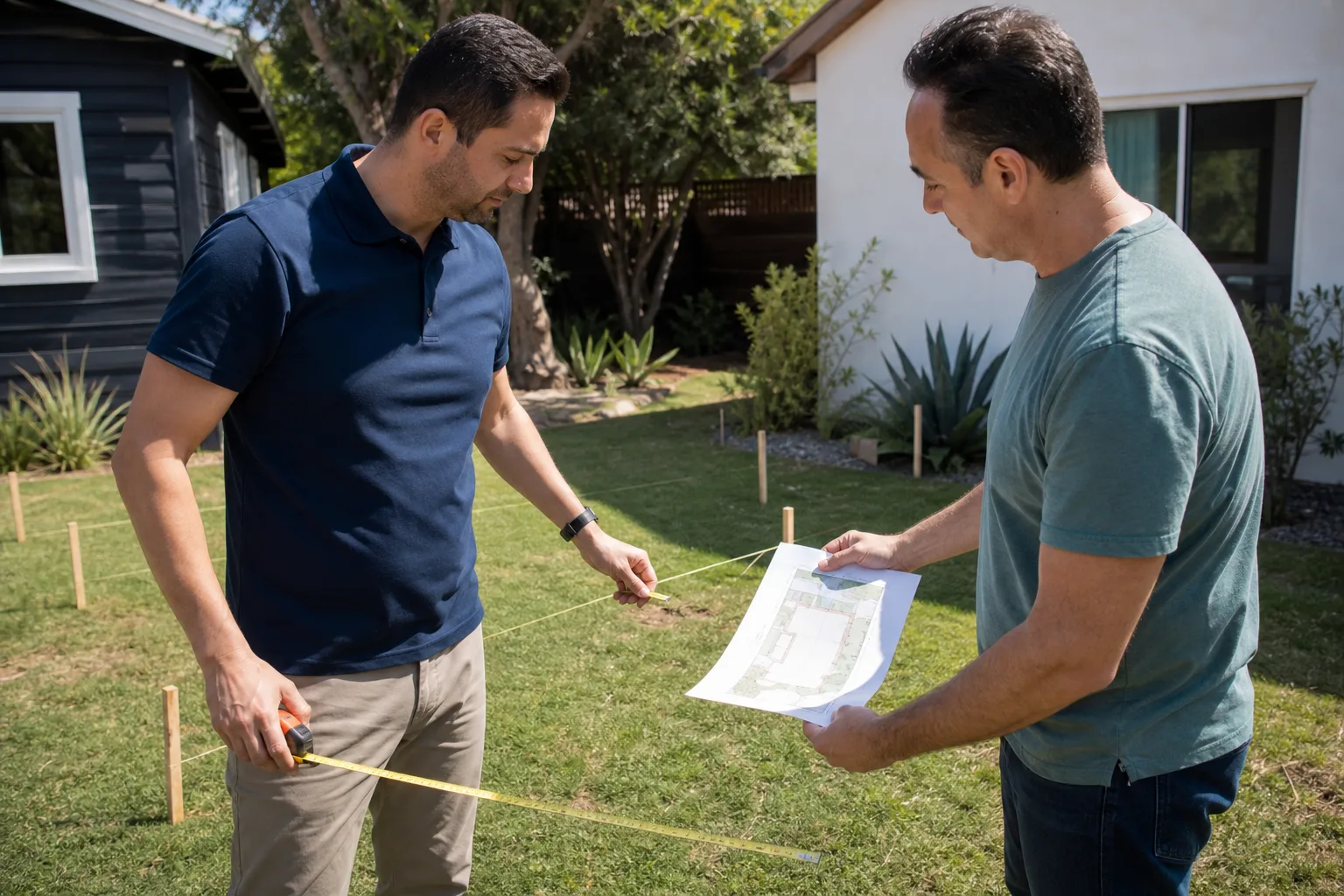
- They never ask about your lot. Setbacks, slope, utility easements, and soil conditions change the price. A bidder who never walked the property is quoting from a template.
- They quote square footage before scope. “About $300 a foot” without a scope conversation is a number in search of a project.
- They can’t explain the site work in the bid. Grading, drainage, utility trenching, and foundation type are the biggest cost swing in any addition. If those aren’t line items, the bid is incomplete.
- They pressure you on timeline. A contractor pushing you to sign “this week to lock pricing” is selling urgency, not construction.
- They don’t hand you a written price. Everything should be on paper before signatures. Every line item, every allowance, every exclusion.
In Winchester, we see a lot of bids that exclude drainage mitigation and then add it as a change order after excavation. That’s why we deliver a written price before any work begins, with no surprises added later.
Who Is Actually Coming to Your Property?
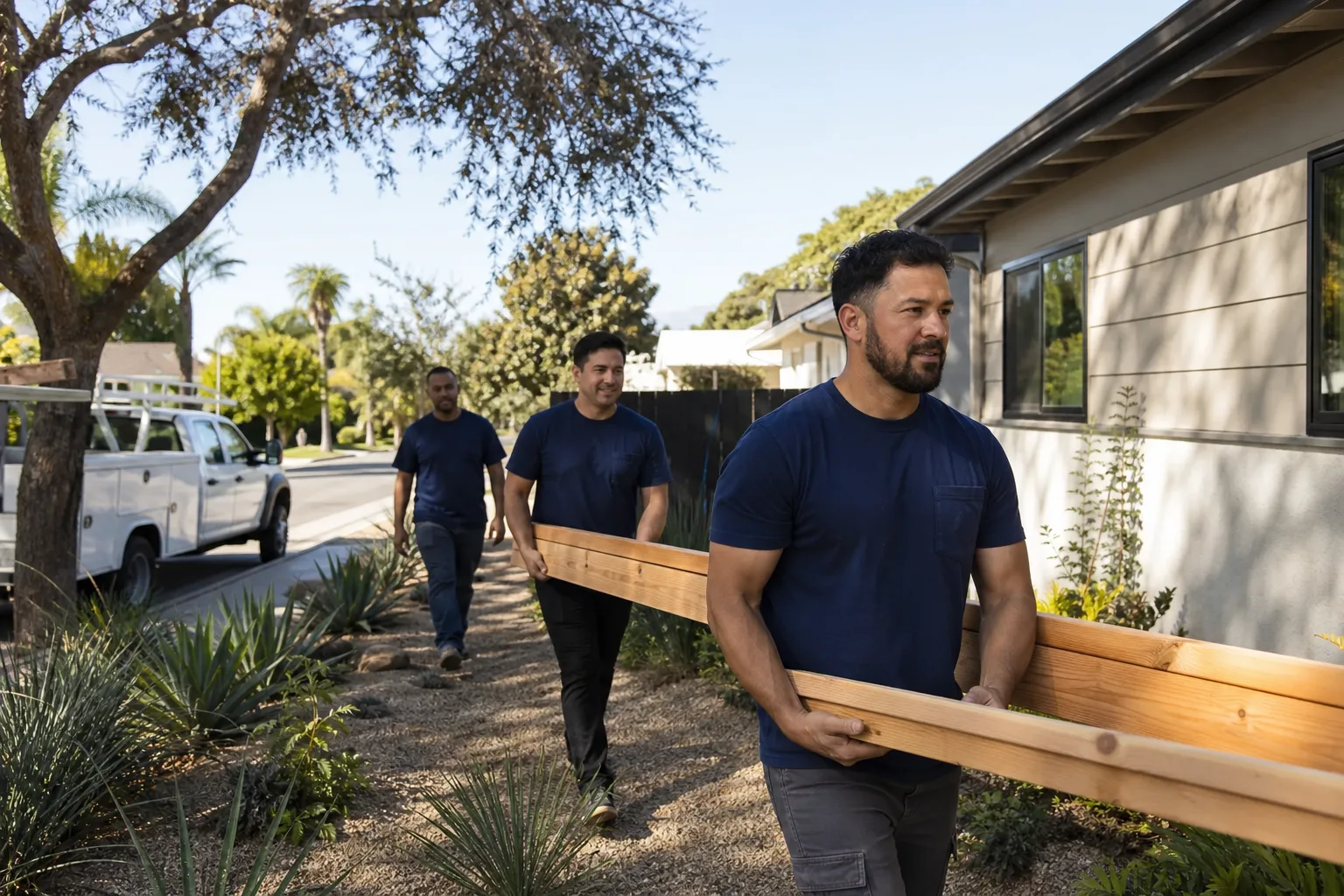
Most homeowners meet the salesperson and never meet the crew. That gap is where real risk lives, especially for homeowners who are home alone during the day, have kids in the house, or are older and understandably wary of opening the door to strangers for months of a build.
Ask this question in the bid: “Can you tell me the name of the lead carpenter on my job, and will I get a photo before they arrive?” The right contractor answers yes without hesitating. The one who won’t is asking you to trust a system you can’t see.
At Sutton ADU Builders Winchester, we send every homeowner the name and photo of the technician before every visit. Every technician is background-checked, identity-verified, and photo-badged, and they show that badge at your door. That standard is called Threshold Verified, and it applies to every visit, not just the first one. If you’re comparing contractors, make this a line item on your checklist – “will I know who’s coming?” – next to the bond and the license.
For room additions specifically, see our Room Addition Contractor in Winchester page for a full breakdown of what a properly scoped project includes.
Common Mistakes to Avoid
- Signing a bid with no allowance numbers. Every allowance hides a future change order. Get the number in writing or the bid isn’t done.
- Skipping the state license search. Searching the Nevada State Contractors Board takes ten minutes. Not searching takes months of cleanup if things go wrong.
- Paying more than 30% before permits are issued. This is the highest-risk pattern we see, and it’s the hardest to recover from.
- Assuming the contractor has built in your jurisdiction. Winchester additions get delayed when plans go to the wrong building department. Confirm the jurisdiction before signing.
- Accepting a handshake as a workmanship guarantee. Get the guarantee in writing, with a specific coverage period and what’s included.
- Not asking who the electrician is. The electrical scope in your addition should name a licensed electrician before the contract is signed, not after.
- Choosing on price alone. The lowest bid and the highest bid are both suspect. Compare scope, crew vetting, guarantee terms, and payment schedule side by side.
When to Call a Professional
Call a professional contractor before you buy plans, not after. If you’re considering a detached addition, a garage conversion, or a full room addition in Winchester, the right contractor will walk your lot, talk through setbacks and utility access, and give you a written price before you sign anything. They’ll also tell you honestly if your lot won’t support what you’re imagining – which saves you tens of thousands compared to discovering it at permit review.
If you’re already holding bids from multiple contractors and don’t trust the numbers, a second opinion is worth the phone call. Sutton ADU Builders Winchester offers free estimates in Winchester – call (844) 761-9367 to schedule yours. We answer live, 24 hours a day, 7 days a week, and we’ll tell you exactly what we see on your lot.
For ADU-specific guidance on product lines like Abodu, Plant Prefab, and Tuff Shed conversions, start at our Sutton ADU Builders Winchester home page.
Frequently Asked Questions
A payment schedule that front-loads more than 30% before permits are issued is the single most predictive red flag. It tells you the contractor is using your money to cover an earlier job or overhead, and it’s the pattern most closely tied to job abandonment. Call (844) 761-9367 for an exact quote – estimates are free.
Search the license number on the Nevada State Contractors Board website and confirm three things: active status, the correct license classification for additions, and a company name that matches your contract exactly. If the company name on the license doesn’t match the one on your bid, don’t sign. Call us for a free estimate – we’ll bring our license number to the first visit.
Not on a properly written contract. Every line item, allowance, and exclusion should be in writing before you sign, and change orders should require a stated price and your signature before work proceeds. If a contractor won’t commit to that, the price will move once demolition starts. The 365-Day Done Right Promise at Sutton covers workmanship for a full calendar year from project completion, and every project begins with a written price – call (844) 761-9367.
Yes – permits are filed and inspections are passed on every addition project, and the permit application should be a line item on your contract before any money changes hands. Ask any contractor which building department will issue your permit. If they can’t name it, they haven’t done the pre-bid work. Call for a free estimate and we’ll confirm your jurisdiction before you sign.
A room addition typically runs four to seven months from permit issuance to final inspection, depending on scope, weather, and jurisdictional review time. Detached ADUs can run longer. The biggest variable is how fast plans are approved, which is why the pre-bid conversation matters. Call (844) 761-9367 for a project timeline specific to your lot.
If you can’t name the licensed electrician who will wire your addition before the contract is signed, the contract isn’t finished. Ask for the license holder’s name and number and verify both on the state database. A contractor who won’t provide it is asking you to trust trades they haven’t hired yet. Call us for a bid that names every trade – estimates are free.
The Bottom Line

The most dangerous addition contractors have websites, reviews, and polished sales pitches. What they don’t have is a named electrician, a named inspection jurisdiction, or a payment schedule that matches the work completed. Watch for open scope language, vague licensing claims, front-loaded deposits, and evasiveness about who’s coming to your property. Ask direct questions during the bid and expect direct answers. A written price, a verifiable license, a bond you checked yourself, and a crew whose names and faces you know before they knock – those four things filter out most of the risk before you ever sign.
Sutton ADU Builders Winchester brings that standard to every addition project in Winchester, backed by the Threshold Verified crew vetting and the 365-Day Done Right Promise. Call (844) 761-9367 for your free estimate.
Written by the team at Sutton ADU Builders Winchester.