Last updated November 18, 2026
DIY vs Professional ADU Builders: What’s Safe to Do Yourself
Nevada lets a homeowner pull their own ADU permit as an owner-builder, and the paperwork makes it look simple. Here’s what the affidavit doesn’t tell you: if you ever sell the house, Nevada disclosure law requires you to tell every buyer the ADU was owner-built. That single line on a seller’s disclosure changes how appraisers value the unit and how lenders treat it, and most people who sign the affidavit never think about it until they’re sitting at a closing table. In this guide we’ll walk through what the owner-builder option actually costs in Winchester, which tasks are genuinely safe to do yourself, and where the savings evaporate.
Quick Answer
As an owner-builder in Nevada you may legally manage and permit an ADU yourself, but only a licensed contractor may perform structural, electrical, plumbing, mechanical, and gas work, so the “DIY” portion is limited to finish and non-permitted tasks. Once you price the coordination hours, re-inspection fees, liability, and the resale and refinance penalties of an owner-built record, most Winchester homeowners find a licensed ADU contractor with a written price lock costs the same or less.
Table of Contents
- What the Nevada owner-builder affidavit actually certifies
- Which ADU tasks are genuinely safe to do yourself
- The real cost of coordinating your own subs
- How an owner-built ADU is treated when you refinance or take out a HELOC
- Owner-builder vs licensed contractor: a side-by-side cost model
- Nevada and Winchester code realities that trip up owner-builders
- Why Winchester’s desert climate punishes unfinished owner-built shells
- Common mistakes to avoid
What the Nevada owner-builder affidavit actually certifies
When you sign the owner-builder affidavit, you’re certifying three things: that you own the property, that you’ll occupy the structure, and that you’re not acting as an unlicensed contractor for compensation. That last clause is where people get into trouble. If you build the ADU for a family member, a renter, or anyone who pays you in any form, you’ve stepped across the line into unlicensed contracting, and the state can require you to tear out and redo work that was performed under a permit you weren’t entitled to hold.
The occupancy restriction matters more than most people realize. An owner-builder permit in Nevada is tied to your owner-occupancy of the property. An ADU by definition is a secondary dwelling, but if you build it as owner-builder and then rent it out as a long-term unit, you’ve created a record that may not conform to how the unit was permitted. In Winchester, where garage conversions and detached units are common on larger lots in the older neighborhoods near downtown, this comes up more than people expect.
The resale disclosure is the part nobody warns you about. Nevada requires sellers to disclose whether a structure was built by an owner-builder, and that disclosure stays attached to the property record. A buyer’s lender sees it, an appraiser sees it, and it shapes how both of them treat the square footage. We’ll dig into the lending side in a later section, but the short version is this: the affidavit is not a private transaction between you and the building department. It becomes part of your home’s history.
Which ADU tasks are genuinely safe to do yourself
There’s a real line here, and it’s drawn by trade licensing, not by how handy you are. A homeowner who has remodeled a kitchen can absolutely handle parts of an ADU build, but the structural and systems work is reserved for licensed trades. Here’s where the boundary sits.
Safe and legal for a skilled homeowner (in most cases):
- Finish work: painting, trim carpentry, cabinet installation, tile, and flooring
- Landscaping and site cleanup around the finished structure
- Interior demolition on a garage conversion, once permits are in place
- Installing fixtures that don’t require a permit to connect (a replacement faucet, a vanity top)
- Selecting and ordering materials, and meeting subs on site
- Painting and sealing the exterior, if the cladding is already installed
Requires a licensed trade in Nevada, no exceptions:
- Electrical rough-in and panel work (including the panel upgrade most ADUs need)
- Plumbing rough-in, gas lines, and water heater installation
- Structural framing, foundation, and shear wall work
- HVAC and mechanical connections
- Roofing and any work requiring fall protection
- Drywall over electrical and plumbing that has not yet been inspected
The drywall rule surprises people. If a homeowner installs drywall over un-inspected rough work, the building department can require the drywall to come back down so the electrical and plumbing can be inspected. That’s not a hypothetical; it happens, and it’s expensive. The safest order is: trades rough in, inspection passes, drywall goes up, then the homeowner does the finishes. That’s a sequence worth writing on the wall of the garage before you start.
The real cost of coordinating your own subs
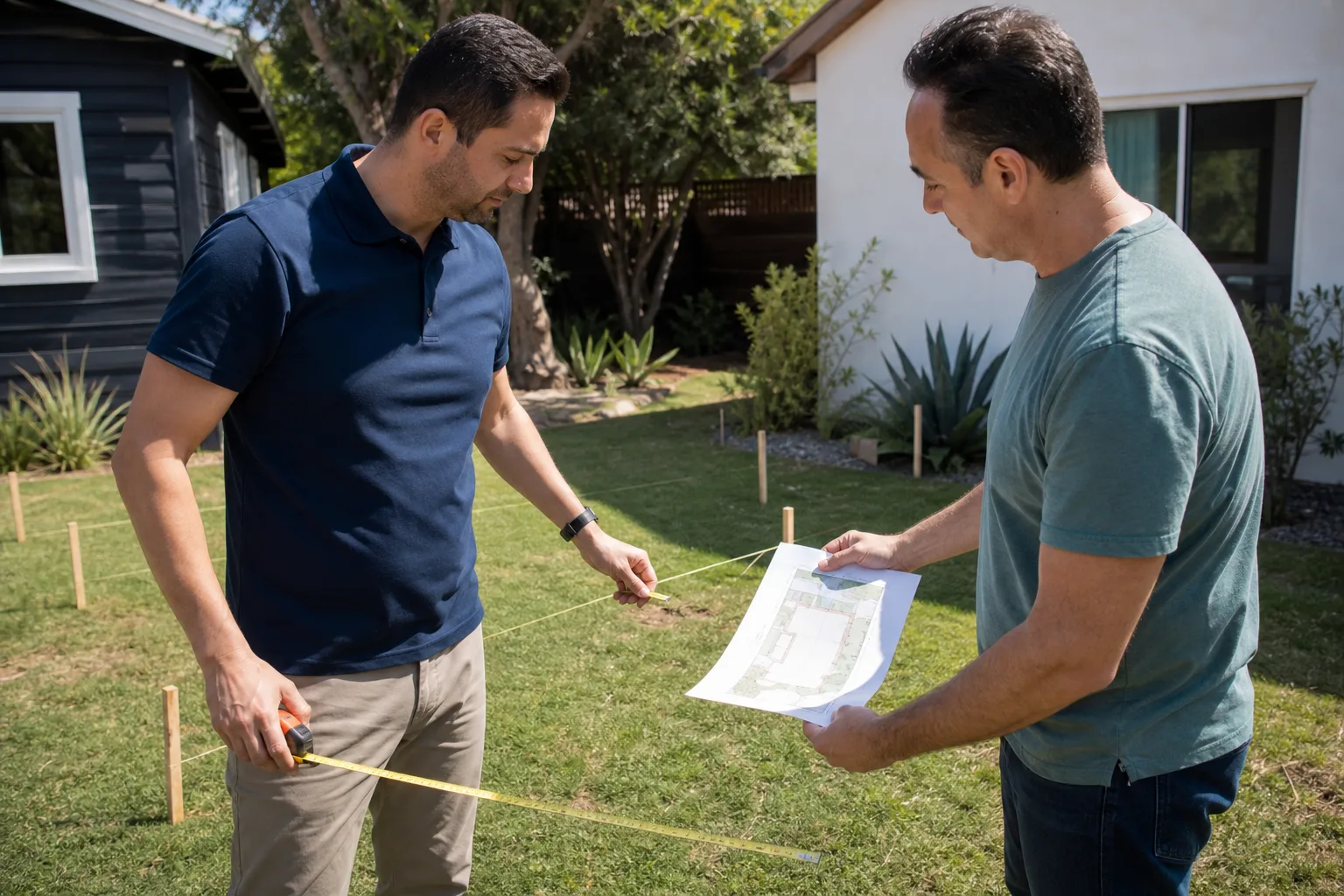
The savings estimate most owner-builders use is naive. It compares the contractor’s total bid against the sum of the sub bids plus materials, and then treats the difference as money in their pocket. What that math leaves out is the work a general contractor actually does: sequencing, scheduling, managing inspection windows, catching errors before they get covered up, and carrying the liability when something fails.
Here’s what the coordination really involves on an ADU in Winchester. We’ve watched owner-builders spend weeks trying to get an electrician, a plumber, and a framer to line up on the same week, because each trade has a two-to-four-week wait for a small job and none of them will start until the prior trade is done. When one slips, the whole schedule moves. And a moving schedule in a desert summer is a problem, because once framing goes up without dried-in status, the structure bakes in the heat and the interior finish schedule compresses into the hottest months.
The re-inspection fees are the other line item that never shows up in the savings estimate. In Winchester, a failed inspection typically means a re-inspection fee plus another scheduling slot, and the trades who have to come back often charge a return-trip minimum. Three failed inspections across a project can easily add a thousand dollars or more to the total, plus weeks. A general contractor’s whole job is preventing those failures, and that’s what the markup pays for.
How an owner-built ADU is treated when you refinance or take out a HELOC
This is the section the savings estimates miss entirely. Lenders care about one question when they see an ADU on your property: is the square footage permitted, is it built to code, and is it documented as such? An owner-built ADU with a clean permit history and inspections is fine. An owner-built ADU with gaps in the record, missing final inspection sign-off, or a disclosure that the structure was self-managed is a flag an underwriter will notice.
In practice, the flag usually shows up two ways. First, the appraiser may decline to count the ADU’s square footage toward the home’s total gross living area, which directly reduces the appraisal value your loan is based on. Second, the underwriter may require additional documentation before counting it as a rentable unit, which reduces how much income the property supports for a HELOC or refinance.
The downstream effect is straightforward: a homeowner who saved $40,000 on the build by acting as their own GC can find themselves with $50,000 or more of borrowing power removed by a smaller appraisal. We’ve watched this play out in Winchester more than once, and the math usually doesn’t favor the DIY route once the refinance side is factored in. If you’re planning to use the ADU’s value as part of a future financial move, get the appraisal treatment in writing from your lender before you break ground.
Owner-builder vs licensed contractor: a side-by-side cost model
Here’s a realistic look at what a 600 square foot detached ADU in Winchester runs both ways. These ranges reflect typical Winchester pricing as of this writing; your lot, utility trenching, and finish level will move the numbers.
Owner-builder total, realistic (600 sq ft detached):
- Permits and plan review: $4,000 – $8,000
- Site work, foundation, utility trenching: $25,000 – $45,000
- Framing, roofing, dry-in (licensed trades): $40,000 – $65,000
- Electrical, plumbing, mechanical rough and trim: $30,000 – $50,000
- Insulation, drywall, finish materials: $25,000 – $40,000
- Coordination time (at $75/hour, 200-350 hours): $15,000 – $26,000
- Re-inspection fees and return-trip charges (realistic 3-5 failures): $1,500 – $5,000
- Risk-adjusted mistakes (error budget, 5-10%): $7,000 – $15,000
- Realistic owner-builder total: $147,500 – $254,000
Licensed contractor with written price lock (same scope):
- Single fixed price including site work, permits, all trades, finishes: $180,000 – $240,000
- Coordination time from homeowner: roughly 10-20 hours for selections and approvals
- Risk-adjusted mistakes: $0 (that’s what the written price and the guarantee cover)
- Realistic contractor total: $180,000 – $240,000
Look at the top of the owner-builder range versus the middle of the contractor range. The savings that looked like $40,000 in the naive estimate shrink to near zero once time value and realistic mistakes are included, and that’s before the appraisal question. The point isn’t that owner-building always loses; it’s that the “I’ll save 20%” assumption doesn’t survive an honest accounting. For a parallel breakdown of this trade-off in broader terms, see our ADU Builders in Winchester page.
Nevada and Winchester code realities that trip up owner-builders
Local code is where the aspirational owner-builder plan meets the ground. Winchester’s lots, especially in the older neighborhoods, were platted before modern setback rules, and a detached ADU has to fit within the current setbacks (the required gap between the new structure and the property line) plus utility easements that were often recorded in a decade when an ADU wasn’t a realistic use. A lot that looks huge on a plat map can shrink dramatically once you overlay the buildable envelope.
Here are the code realities we work through on nearly every Winchester ADU project:
- Setbacks and lot coverage: back and side setback requirements plus a max lot-coverage percentage often rule out the location a homeowner imagined.
- Utility trenching: running power, water, and sewer to a detached unit is often the largest surprise line item, especially on lots with mature trees.
- Panel capacity: most Winchester homes need a panel upgrade before the ADU’s electrical load can be added, and that’s a licensed electrician’s job.
- HOA restrictions: plenty of Winchester neighborhoods have covenants that go beyond the city’s rules, and an HOA can be harder to satisfy than the building department.
- Fire separation: detached ADUs are usually treated differently than attached ones, and the fire-rating requirements change what materials you can use on the exterior.
None of these are unsolvable, and none of them should stop you from building. They’re the kind of thing a contractor who works Winchester lots every month catches in the first site visit, and an owner-builder tends to discover in a re-inspection notice six weeks in. For home-addition projects that share the same code environment, see our Home Addition Contractor in Winchester page.
Why Winchester’s desert climate punishes unfinished owner-built shells
Winchester sits in a desert summer that reaches well past 105 degrees, and it also sits in the path of the monsoon moisture that rolls through in July and August. That combination is unkind to a build that moves slowly. A framing crew that goes up in April and sits without dried-in status through a June windstorm and a July downpour is a framing package exposed to water intrusion, wind-driven dust in the wall cavities, and lumber movement that has to be corrected before drywall. Those aren’t hypothetical risks in Winchester. They’re the most common physical problem we see on stalled owner-built projects.
An ADU that gets dried in fast is a different project. It’s insulated and sealed before the worst of the summer, and the finish trades can work in conditioned space. That’s a scheduling advantage a general contractor brings almost by default. The steel of the schedule is the sequencing, and the sequencing is what the general contractor is paid to hold. Our Room Addition Contractor in Winchester team sees the same dynamic on attached additions, where an open roof deck during monsoon season causes weeks of delay and thousands in water remediation.
Common Mistakes to Avoid
- Signing the owner-builder affidavit without reading the resale clause. The disclosure stays with your home record and follows the property to every future buyer, not just the next one.
- Renting the ADU you built as owner-builder. Long-term rental of a unit built under an owner-occupancy affidavit creates a use that may not match the permit, which is the kind of thing that surfaces during a future sale or refinance.
- Covering un-inspected rough work with drywall. In Winchester, the building department will make you tear it out, and the trades’ return trips are on your dollar.
- Booking subs without a sequencing plan. The wait time for small-ticket trades in Winchester is often two to four weeks, and booking them out of order costs you a second scheduling window.
- Building the detached ADU where it fits instead of where it can be permitted. Overlaying setbacks, easements, and lot coverage should be the first conversation, not the last.
- Skipping the HOA check. Some Winchester HOAs restrict ADUs through covenants that are stricter than city code, and a compliant structure can still be non-compliant with your HOA.
- Underestimating the coordination hours. A realistic estimate is 200 to 350 hours of your time across a full build, which is close to two months of full-time work squeezed into a schedule that spreads across a year.
When to Call a Professional
Some scenarios genuinely call for a licensed ADU contractor rather than an owner-builder. If any of these describe your plan, the math probably favors hiring: you’ll need to finance the build or refinance in the next few years and want the appraisal to count the unit at full value; you can’t dedicate 200+ hours to coordination; the lot has utility easements or setback constraints you can’t fully untangle; the build requires a panel upgrade, gas line, or any structural work; or you’re building so you can rent the ADU and want the permit record to hold up to lender scrutiny. For those cases, Sutton ADU Builders Winchester provides written pricing before any work starts and free estimates in Winchester with no obligation. Call (844) 761-9367 to schedule yours. If you’d rather read first, our Sutton ADU Builders Winchester home page explains how a project is scoped from the first site visit.
Frequently Asked Questions
Yes, Nevada allows an owner-builder to pull an ADU permit on their own residence, but the licensed-trades requirement is strict. You can handle coordination, finishes, and non-permitted tasks yourself, and you may not perform structural, electrical, plumbing, mechanical, or gas work; those must be done by licensed professionals. If you’re not sure whether your plan crosses that line, call (844) 761-9367 for a free estimate, and we’ll walk you through what’s realistic.
It can, because Nevada requires sellers to disclose whether a structure was built by an owner-builder, and appraisers and lenders treat that record differently than a contractor-built ADU. The unit can still be appraised at full value if permits and inspections are complete, but gaps in the record are the most common reason it gets excluded from the home’s gross living area. Call (844) 761-9367 for a free estimate if you want to know how a professionally built and permitted ADU would be scoped for your Winchester lot.
Often less than expected, once coordination time and realistic mistakes are counted. A naive comparison shows a $30,000 to $50,000 gap, but 200 to 350 hours of your time at $75/hour plus $1,500 to $5,000 in re-inspection fees and a 5-10% mistake budget typically shrinks the gap to near zero on a 600 square foot detached unit. Call (844) 761-9367 for a written price you can compare against your own estimates.
Usually yes, because the markup covers sequencing, inspection management, and liability that would otherwise fall on you. The most expensive owner-built ADU we’ve seen wasn’t the one that went over budget on materials; it was the one that sat half-dried-in through a monsoon season and needed remediation. A written price lock is the alternative to that risk. For an ADU builder who quotes in writing before any work begins, see our ADU Builders in Winchester resource and call (844) 761-9367.
The affidavit restricts you from building for compensation or acting as an unlicensed contractor, and it ties the permit to your owner-occupancy of the property. Building an ADU as owner-builder with the intent to rent it as a long-term unit creates a record that may not conform to the permit, and that gap surfaces during sale or refinance. If you’re planning to rent the unit, an ADU builder with a licensed crew and clean permit path is the safer route. Call (844) 761-9367 for a free estimate.
Not identically, because lenders and appraisers treat owner-built records with more scrutiny than contractor-built ones, especially on refinance and HELOC products. The cleanest path to full appraised value is a permit record with all inspections signed off and a contractor’s documentation on file. If the financing math matters to you, we can walk through it with a free estimate: call (844) 761-9367.
The Bottom Line
Nevada’s owner-builder option is real, and for a genuinely skilled homeowner with time on their hands it can work. But the savings picture is much thinner than the estimate suggests once coordination hours, re-inspection fees, mistake risk, and the resale and refinance consequences are included. The honest split is this: finishes, landscaping, and site cleanup are safe to do yourself, and structural, electrical, plumbing, mechanical, and gas work belong to licensed trades. Everything in between is the general contractor’s job, and in Winchester the math usually favors hiring one with a written price. Get a free estimate from Sutton ADU Builders Winchester and compare it to your own numbers: call (844) 761-9367.
Written by the team at Sutton ADU Builders Winchester.