Last updated November 18, 2026
DIY vs Professional ADU: The Winchester Homeowner’s Decision Guide
Nevada’s owner-builder exemption lets a homeowner legally pull permits and build an ADU on their own property. It also puts every code violation, every failed inspection, and every insurance complication on your shoulders personally. That trade is worth understanding before you pick up a hammer or sign a contract. This guide maps the exact legal line between what an unlicensed Winchester homeowner can perform and what Nevada law reserves for licensed trades, then puts honest numbers beside both paths so you can decide with your eyes open. Not with a brochure.
Quick Answer
The DIY vs professional ADU decision in Winchester comes down to scope, not skill. Nevada’s owner-builder exemption allows you to act as your own general contractor and perform much of the structural and finish work, but electrical, plumbing, and mechanical (HVAC and gas) must be done by state-licensed trade contractors in almost every case. Most Winchester homeowners who run the math find that the realistic savings on a detached ADU fall well short of the risk once permit time, insurance gaps, and resale complications are counted.
Table of Contents
- What Nevada’s Owner-Builder Exemption Actually Permits
- The Scope Line: What Still Requires a Licensed Trade Contractor
- The Insurance Gap Nobody Warns You About
- The Real Time Cost of DIY Permit Navigation
- Which ADU Tasks Are Realistically DIY
- Resale and Rental Risk for Owner-Built ADUs
- Running the Numbers: DIY vs Professional in Winchester
- Where Prefab Fits Into the Decision
What Nevada’s Owner-Builder Exemption Actually Permits
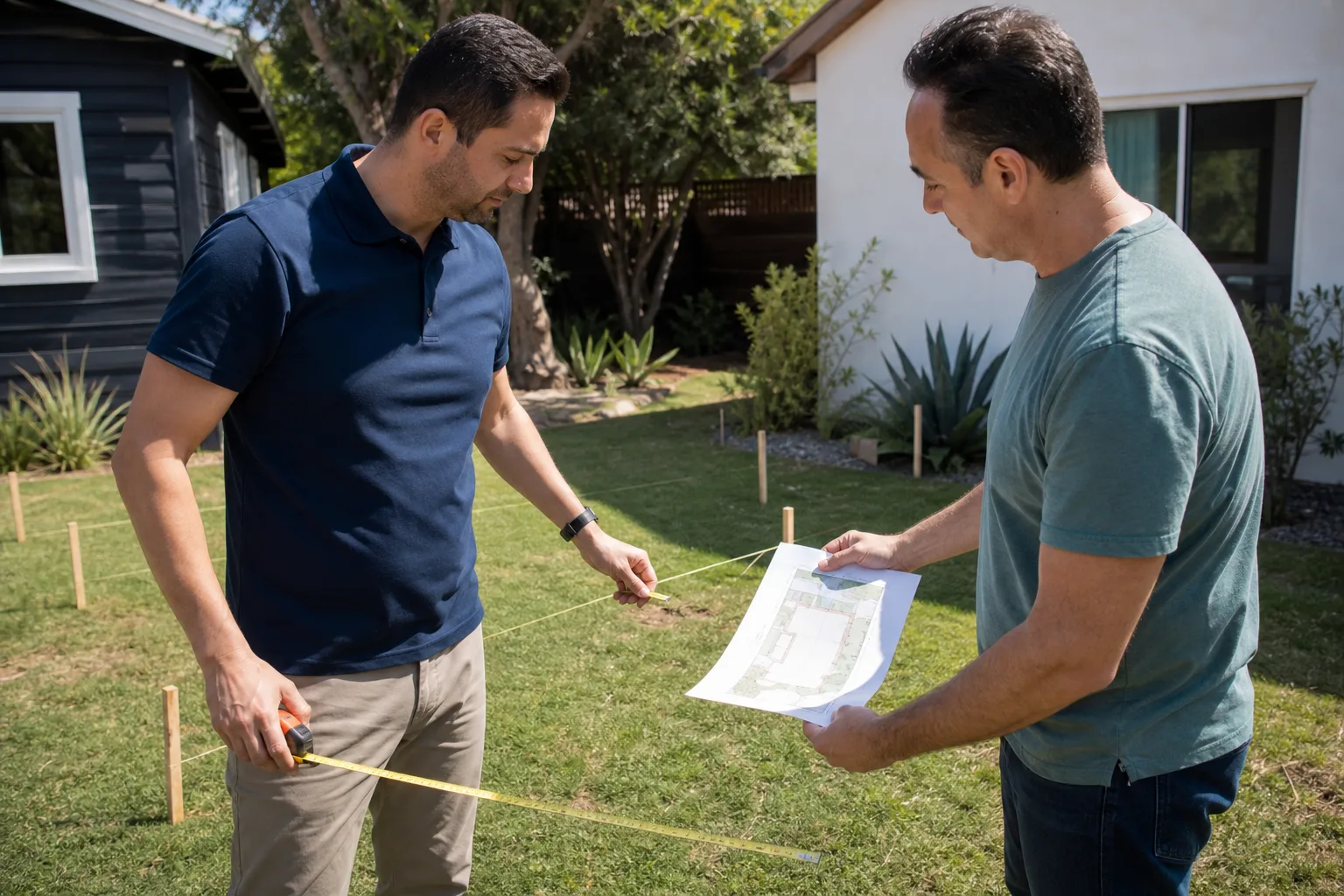
Nevada law lets a property owner act as their own contractor on a home they intend to occupy, including an ADU on that same lot. This is not a statewide loophole; it’s a recognized exemption with conditions. You can pull the building permit under your own name, hire subcontractors directly, and do construction work yourself. What you cannot do is build an ADU for sale or rent as a speculative project under the exemption and escape contractor licensing requirements.
The wording matters in Winchester because Clark County enforces owner-builder permits at the plan-check stage. Expect to sign an affidavit confirming you intend to live on the property and understand the inspection obligations. If a county plan reviewer senses the ADU is being built for immediate resale, the exemption gets challenged.
What the exemption actually gives you:
- Authority to pull the building permit in your own name without a contractor license
- Permission to perform structural, framing, drywall, roofing, and finish carpentry yourself
- Permission to hire licensed trade subcontractors directly for electrical, plumbing, and mechanical
- Responsibility for scheduling inspections, correcting failed items, and closing the permit
What it does not give you:
- Any cover for code violations discovered later
- Any protection from unlicensed-trade penalties if you wire or plumb the unit yourself
- Any guarantee that your insurer will treat the structure the same as a contractor-built ADU
That last point deserves its own section. It’s the part most DIY guides skip entirely. Our team at Sutton ADU Builders Winchester home fields questions about this exemption routinely, and the honest answer is that the exemption is real and useful. It just isn’t free.
The Scope Line: What Still Requires a Licensed Trade Contractor
This is where DIY ADU dreams in Winchester usually collide with reality. Even under owner-builder status, Nevada requires licensed contractors for three core trades: electrical, plumbing, and mechanical. Mechanical covers HVAC, gas piping, and anything involving combustion or refrigerant. In practice this means you can frame, sheath, drywall, and paint your ADU yourself, but you cannot legally run the branch circuits, set the panel, install the water heater, pull gas lines, or charge the mini-split.
The line looks roughly like this:
- Licensed trade required: electrical rough-in and trim, service panel work, plumbing rough-in and fixtures, gas line installation, HVAC equipment installation and refrigerant charging
- Owner can typically perform: framing, sheathing, roofing, insulation, drywall, interior finish carpentry, exterior siding, painting, landscaping, and site prep
- Gray zone: fixture setting, low-voltage wiring, and some finish plumbing depend on the jurisdiction and how the permit is written
What does this mean in dollars? On a typical 600-square-foot detached ADU in Winchester, electrical, plumbing, and mechanical subcontracts run roughly $22,000 to $38,000 depending on distance to the main panel and how much trenching is involved. You can sometimes save 10% to 15% by acting as your own general contractor and coordinating those subs yourself. What you rarely save is the trades’ labor. They charge the same whether a licensed GC or a homeowner calls.
The catch: coordinating three licensed subs around inspections, sequencing, and county scheduling is a real job. Missing one rough-in inspection means a re-inspection fee and a stalled schedule. See our ADU Builders in Winchester page for how the professional path handles this sequencing.
The Insurance Gap Nobody Warns You About
Here is the part that surprises Winchester homeowners at the worst possible moment: your homeowner’s policy may not treat an owner-built ADU the same as a contractor-built one. Carriers vary, but many standard HO-3 policies contain language that limits coverage on structures the insured built personally, particularly when the work was never inspected to a final sign-off. Some require a specific rider. Some decline entirely.
The practical checklist before you commit to DIY:
- Call your carrier before you pull the permit and ask directly: “If I build a detached ADU under an owner-builder permit and it passes all local inspections, will you insure it under my existing policy or do I need a rider?”
- Get that answer in writing, by email, with the policy number referenced.
- Ask whether the answer changes if inspections are complete versus partial.
- Ask about liability coverage if a future tenant or guest is injured in the ADU.
- Compare that answer against what a contractor-built ADU would receive from the same carrier.
In our experience working with Winchester homeowners, carriers are more cautious post-2020 about any structure that wasn’t built by a licensed contractor with documented inspections. Not because the work is worse. Because the paperwork trail is thinner. When a claim gets filed, documentation is what the adjuster uses.
The disclosure side matters too. Nevada requires disclosure of material facts when you sell a home. An owner-built ADU, even one properly permitted and inspected, is a material fact most realtors will flag on the seller’s disclosure form. Buyers ask harder questions about owner-built structures. Some lenders ask harder questions too.
The Real Time Cost of DIY Permit Navigation
Most Winchester homeowners underestimate the permit process by a factor of three. Pulling a residential ADU permit through Clark County typically involves plan submittal, plan review (often 2 to 6 weeks depending on workload), corrections, resubmittal, and eventual issuance. Then you schedule and attend inspections at each phase. On a detached ADU, expect 8 to 14 separate inspection visits.
The hours add up fast. A realistic count for the average homeowner acting as their own GC:
- Plan preparation and drafting support: 15 to 30 hours (or $2,000 to $4,500 paid to a designer)
- Submittal, plan review responses, and corrections: 20 to 40 hours
- Coordinating three licensed subs: 30 to 50 hours
- Inspection scheduling and on-site attendance: 25 to 40 hours
- Material takeoffs, ordering, delivery coordination, and returns: 30 to 60 hours
- Problem-solving during construction (shortages, sequencing errors, unknown site conditions): 40 to 100 hours
That’s 160 to 320 hours of uncompensated project management. At a $75/hour opportunity cost, that’s $12,000 to $24,000 of your own time. The dollar savings on paper can look like $30,000 to $60,000 on a DIY project compared to a professional build. Once you subtract your own hours, the real gap tightens considerably.
And that’s when everything goes right. When a plan reviewer in Winchester comes back with corrections because the structural calcs don’t match the state code edition, the timeline stretches by weeks. Every week of delay on an ADU build carries carrying costs: your existing loan, your property taxes, and the rental income you aren’t yet collecting. At a realistic $1,600 to $2,200 per month rental rate in Winchester, every delayed month is real money.
Which ADU Tasks Are Realistically DIY
If you want to keep your hands on the project without taking on the whole risk load, there’s an honest middle ground. Some tasks are realistic and safe to do yourself. Others aren’t, and it’s worth knowing which is which before the first delivery truck arrives.
Realistic DIY work that generally doesn’t void warranties or complicate the permit:
- Landscaping, xeriscaping, and yard finishing (especially valuable in Winchester’s climate)
- Interior painting and touch-up after final inspection
- Exterior painting on non-James Hardie surfaces (the James Hardie system should be installed to spec by qualified hands if you want the manufacturer warranty to hold)
- Closet systems, shelving, and finish carpentry after rough-in
- Fence installation, patio finishing, and hardscape
- Furniture, appliances, and interior decorating
Tasks that look DIY-friendly but usually aren’t:
- Tile work in wet areas (waterproofing failures are the most common cause of ADU callbacks)
- Drywall finishing to a level-4 or level-5 finish (visible seams show up in every rental photo)
- Cabinet installation without prior experience (out-of-square reveals cost more to fix than to install)
- Anything involving the roof envelope, which in Winchester’s summer heat and monsoon-season rain is unforgiving
The rule of thumb: finish work after the final inspection is DIY-safe. Anything that requires an inspection before it’s covered up isn’t. If you want a room addition rather than a detached ADU, the same logic applies, and our Room Addition Contractor in Winchester page covers how the permitting differs.
Resale and Rental Risk for Owner-Built ADUs
Two different groups will evaluate your ADU when it’s done: appraisers and property managers. They don’t look at it the same way.
Appraisers value an ADU based on comparable sales of homes with ADUs, confirmed permitted status, and documented inspection history. An owner-built ADU with a clean paper trail (all permits, all inspections passed, all trade licenses on file) typically appraises at the same value as a contractor-built unit of similar quality. An owner-built ADU with missing final inspections, unpermitted work discovered during appraisal, or a scope that doesn’t match the permit will drag the value down hard. We’ve seen an unpermitted finished garage conversion in Winchester knock $40,000 to $60,000 off an appraisal because the lender required it be removed or retroactively permitted before closing.
Property managers are more practical than appraisers. They care about the unit being habitable, code-compliant, and insurable. They will ask for the certificate of occupancy. If you don’t have one, they won’t rent it.
Both groups care about the same thing: documented status. If you build under an owner-builder permit and follow it all the way through final inspection, the ADU is legitimate. If you leave the paperwork incomplete, the ADU becomes a liability on the resale market, and renting it becomes an insurance problem rather than a rental income.
Running the Numbers: DIY vs Professional in Winchester
Here’s the honest cost picture, using current Winchester ranges for a 600-square-foot detached ADU. These figures assume a standard lot with utilities available at the alley or street, normal soil, and no unusual site work.
- Professional full-service build: $180,000 to $280,000 all-in, including design, permits, construction, finishes, and final inspection
- Owner-as-GC build (hiring licensed trades, doing finish themselves): $135,000 to $210,000 in hard costs, plus 160 to 320 hours of your time, plus $2,000 to $4,500 in design fees
- Owner-as-GC with additional DIY labor on framing and finish: $110,000 to $175,000 in materials and subcontracted trades, plus 400+ hours of your time, plus design fees
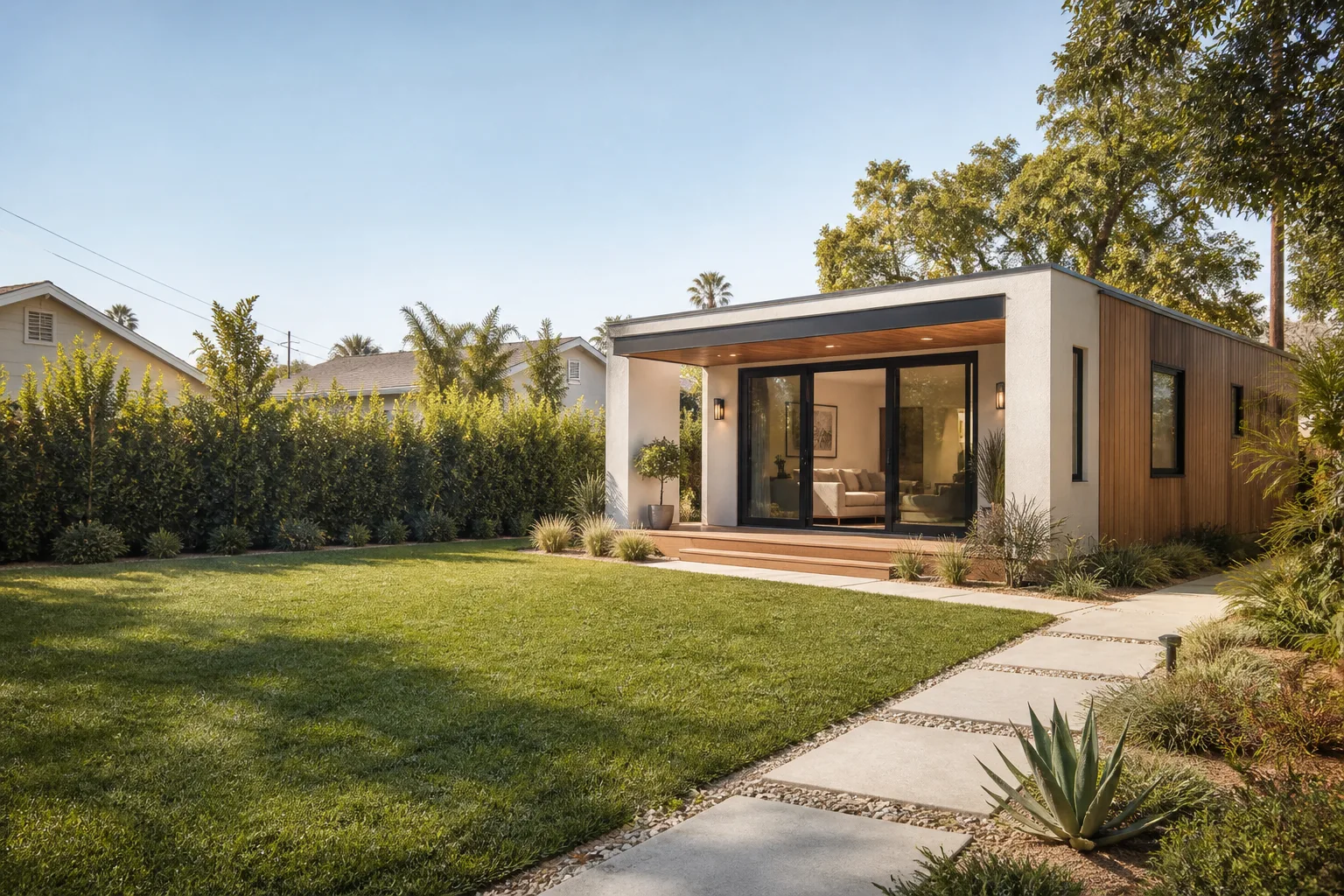
- Prefab ADU (Abodu, Cover, Dvele, Mighty Buildings, or similar): $160,000 to $260,000 installed, depending on model and site work
The raw numbers suggest DIY saves real money. Then subtract your time. If 250 hours of your project management is worth $15,000 to you, and the DIY route carries an insurance gap and a resale-documentation risk, the honest savings narrow to $10,000 to $30,000, with meaningfully more risk on your side of the table.
If your schedule and skillset genuinely support acting as your own GC and you’re building a forever-home ADU (not a speculative one), DIY is a reasonable choice. If you’re building for rental income, family support, or eventual resale, the professional route with documented warranties usually pencils out better on a risk-adjusted basis.
Where Prefab Fits Into the Decision
Prefab and modular ADUs complicate the DIY vs professional question in a useful way. Brands like Abodu, Cover, Dvele, and Mighty Buildings deliver a factory-built structure that arrives substantially complete, which sidesteps most of the onsite construction risk. The trade-off: installation still requires licensed onsite trades for the utility tie-ins, foundation work, and final hookups. You can’t DIY a prefab delivery, and the factories won’t warranty an installation they didn’t control.
For Winchester homeowners weighing the decision, prefab often answers the “I want speed and fixed scope but not the full DIY risk load” question. Factory quality control is generally tighter than onsite-owner-build quality control. Utility connection costs and site prep vary widely by lot, and in Winchester the site work can swing $15,000 to $45,000 depending on grading and distance to the nearest utility stub.
We work with all the major prefab lines, and we’re happy to explain where each one fits without steering you toward the most expensive option. If you’re comparing prefab against site-built, our Home Addition Contractor in Winchester page explains the trade-offs on the site-built side.
Common Mistakes to Avoid
- Pulling an owner-builder permit without checking insurance first. Call your carrier before plan submittal, not after. The answer changes your whole calculus.
- Acting as your own GC without understanding inspection sequencing. Rough-in inspections must pass before drywall goes up. Miss one, and you’re tearing out finished work in Winchester’s summer heat to fix it.
- Underestimating the plan-review timeline. Clark County plan review can run 4 to 6 weeks on ADU submittals during peak season. Budget for 8 weeks minimum if the design is at all custom.
- Trying to do electrical or plumbing yourself. The savings on paper rarely survive the permit-correcting reality. Nevada treats unlicensed trade work seriously.
- Skipping the final inspection. An ADU without a certificate of occupancy can’t be legally rented, and it becomes a documented problem at resale.
- Using a Tuff Shed or similar structure as a “no-permit” ADU. Sheds above certain size thresholds and any structure with plumbing or power require permits. The permit-free path mostly doesn’t exist in Winchester.
- Not accounting for your own hours. Track them. The DIY savings most homeowners report feeling are smaller than the spreadsheet predicted because the hours weren’t counted.
When to Call a Professional
If any of these describe your situation, professional help earns its keep: you’re building for rental income, you’re on a fixed timeline, you’re not currently able to be on-site during inspection days, you have a restrictive lot (slope, tight setbacks, or utility access issues), or you want a warranty that outlasts the build. Our technicians have up to 20 years of experience, and Sutton ADU Builders Winchester offers free estimates in Winchester – call (844) 761-9367. Every project under the Threshold Standard comes with a written price before work begins and a 365-Day Done Right Promise covering defects in workmanship for one full calendar year from completion. Every technician is background-checked, identity-verified, and photo-badged; you get their name and photo before they arrive. For a build that will sit on your property for the next 40 years, that paperwork matters more than the raw labor savings.
Frequently Asked Questions
Yes, under certain conditions. Nevada’s owner-builder exemption allows a homeowner who intends to occupy the property to pull permits and act as their own contractor for structural, finish, and site work. You still must use licensed trade contractors for electrical, plumbing, and mechanical work, and you still must pass every inspection. The exemption works, but it shifts all responsibility for code compliance, insurance coverage, and resale documentation onto you. Call (844) 761-9367 if you want a free estimate on the professional path before deciding.
Realistically, $10,000 to $30,000 on a 600-square-foot detached ADU after accounting for your own project-management hours. Raw construction savings look larger ($30,000 to $60,000 on paper), but once you subtract 160 to 320 hours of your time at a reasonable opportunity cost, plus design fees, plus carrying costs during delays, the gap narrows considerably. Call (844) 761-9367 for an exact quote on the professional path so you can compare with real numbers.
Not necessarily, and the answer varies by carrier. Many standard policies treat owner-built structures differently from contractor-built ones, particularly when the paperwork trail is thinner. Call your carrier before you commit to DIY and get the answer in writing with your policy number referenced. If coverage is limited or requires an expensive rider, that cost needs to be added to the DIY side of the comparison. Call (844) 761-9367 if you want to discuss how professionally-built ADUs are typically documented for insurance.
Yes, with narrow exceptions. Nevada requires state-licensed contractors for electrical, plumbing, and mechanical work, including gas lines and HVAC. There is essentially no path to legally doing the electrical or plumbing rough-in on your own ADU without a license, regardless of your skill level. Finish work after final inspection is generally DIY-safe. Call (844) 761-9367 to talk through what parts of your build could stay in your hands.
Plan review through Clark County typically runs 2 to 6 weeks, and the full permit-to-inspection cycle on a detached ADU takes 4 to 8 months. Homeowners acting as their own GC should expect to add time for corrections, resubmittals, and scheduling mismatches between trades. A contractor familiar with the process builds that timeline into the schedule from day one. Call (844) 761-9367 for a realistic timeline estimate on your Winchester lot.
Only if the paperwork is incomplete. A properly permitted, fully inspected owner-built ADU with all trade licenses and a certificate of occupancy on file typically appraises at parity with a contractor-built unit. An owner-built ADU with missing final inspections or unpermitted work discovered during appraisal can reduce value substantially – we’ve seen a finished garage conversion in Winchester knock $40,000 to $60,000 off an appraisal. Documentation is the deciding factor. Call (844) 761-9367 if you want to understand how the professional build documents the process for resale.
The Bottom Line
The DIY vs professional ADU decision in Winchester isn’t about whether you can swing a hammer. It’s about whether the legal scope, insurance gap, permit time, and resale documentation risk are worth the $10,000 to $30,000 that realistically separates the two paths after your time is counted. If you’re building a forever-home ADU, you’re comfortable navigating Clark County plan review, and you’ve confirmed your insurance covers the structure, DIY is a legitimate choice. If you’re building for rental income, resale, or a fixed timeline, the professional path with written pricing, documented inspections, and a real warranty usually wins on a risk-adjusted basis. Sutton ADU Builders Winchester builds both detached ADUs and additions, and our team is happy to answer questions before you decide. Call (844) 761-9367 for a free estimate – every project starts with a written price.
Written by the team at Sutton ADU Builders Winchester.