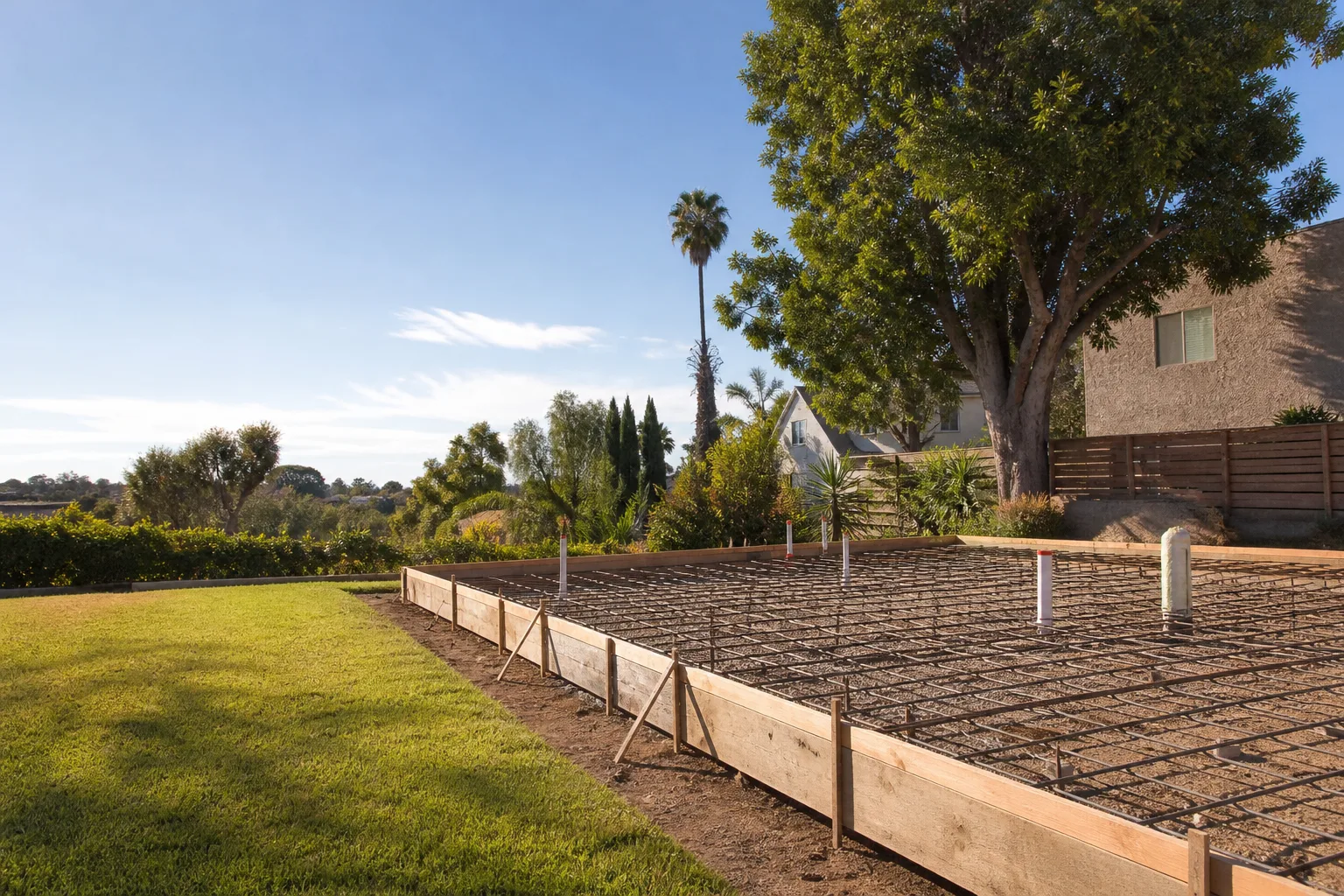

Abodu Site Prep & Utilities: The Winchester Owner’s Guide
Site prep and utility hookups for an Abodu in Winchester typically run $18,000 – $46,000 depending on lot conditions, trench length, and how far your panel sits from the pad. The work covers grading and excavation, the concrete pier or slab foundation, and the electrical, water, sewer, and gas connections your unit needs to pass inspection. We’re an independent contractor and we’re not affiliated with Abodu. Most owners discover a utility or site-prep problem at one of two moments: the pre-pour inspection, or the first heavy rain when the pad holds water against the unit’s sill. Call (844) 761-9367 for a free estimate and a written price before any digging starts.
Which Abodu Models This Applies To
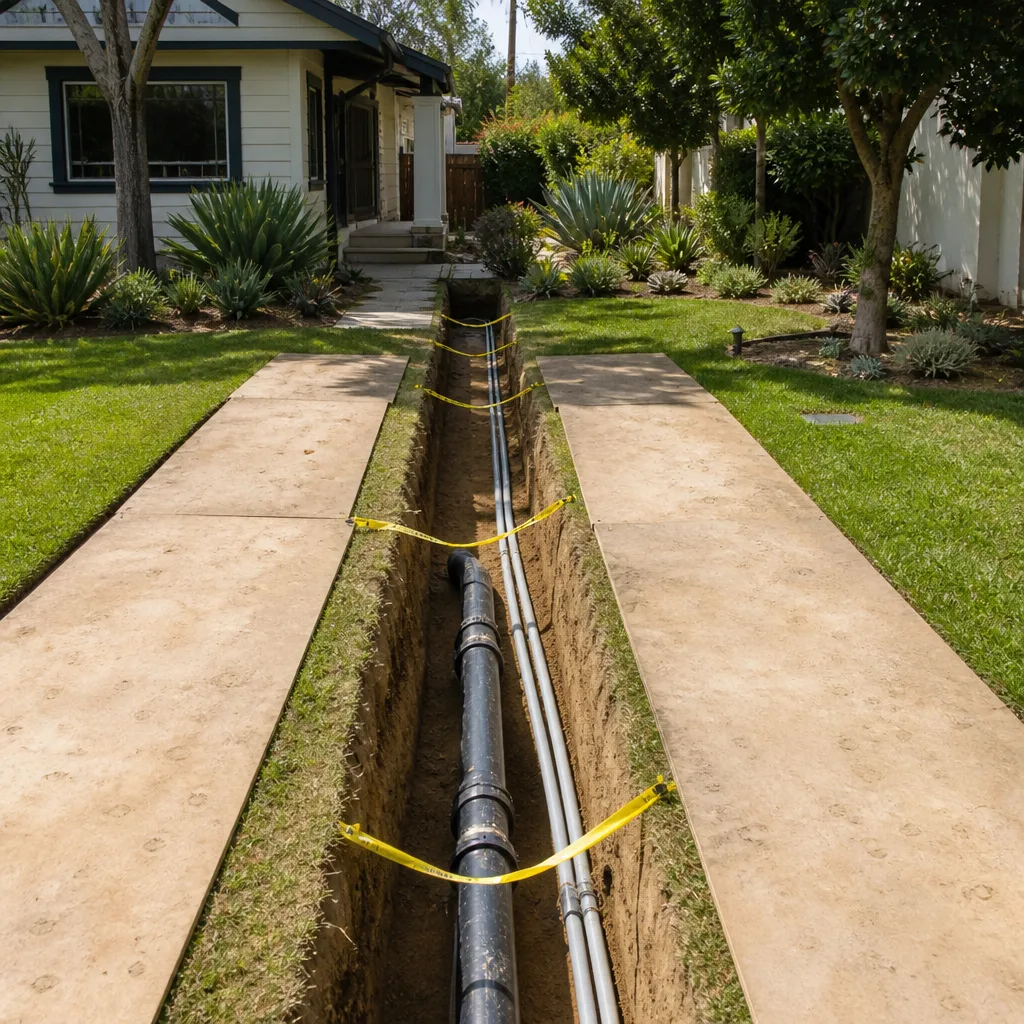
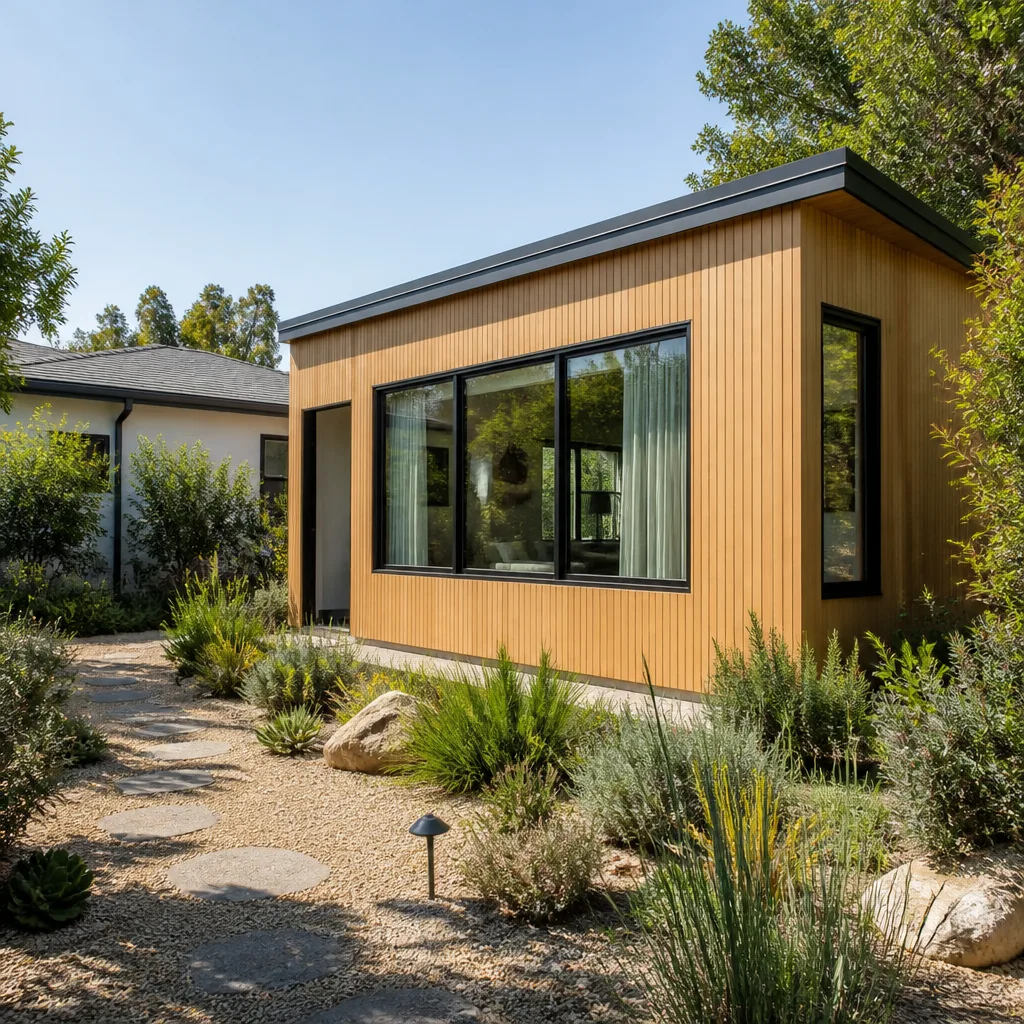
Abodu builds its units on a pier-and-beam foundation with utility stub-outs set at fixed locations, and those locations differ between the one-bedroom and two-bedroom lines. The one-bedroom models tend to land in the 340 to 420 square foot range and run utilities to a tighter footprint; the two-bedroom plans in the 500 to 620 square foot range push the sewer stub farther from the unit’s wet wall. The practical effect in Winchester: if your contractor preps site work for the wrong floor plan, the sewer stub can miss the unit’s connection point by 8 to 14 inches, and that means re-cutting the pad. Identify your model from the plan set Abodu issued at order, not from memory. The drawings spell out the utility stub coordinates, the pad dimensions, and the required anchor spacing, and those three numbers are what your site contractor has to hit.
On the OEM-versus-aftermarket question: site prep and utility connections aren’t a branded part you buy from Abodu. The unit is prefabricated, but the trenching, foundation, conduit, and connections are local trade work governed by code. What matters is whether the contractor read your Abodu plan set and knows the stub layout, not whether the conduit came in an Abodu box. Electrical panels, breakers, and conduit fittings are commodity components, and we use listed hardware from recognized manufacturers that meets code for a residential service. If anyone offers you an “Abodu-specific” utility part, ask to see the spec sheet. There isn’t one.
Signs Your Abodu Site Prep & Utilities Is Failing
Utility and site problems rarely announce themselves. They show up as slow symptoms that get worse:
- Water pooling against the pad after rain. Grading that falls toward the unit instead of away from it lets water sit against the foundation and the sill. In Winchester, the summer monsoon pushes a lot of water in a short window, and a pad that drains fine in July can hold an inch against the wall by August.
- A tripping breaker once the unit goes live. This usually traces to an undersized service panel or a load calculation nobody ran before the panel was set. An Abodu with an electric water heater, a mini-split, and a dryer can pull more than a shared 100-amp service will carry.
- Sewer or drain smells near the unit. A stub that was set at the wrong slope, or a connection that wasn’t bedded properly, lets waste sit in the line. You’ll smell it before you see a backup.
- Concrete hairline cracks spreading from the corners of the pad. Some cracking is normal, but cracks that widen and track along the anchor points mean the pad was poured too thin or on poorly compacted soil. Winchester’s caliche layer and hard summer ground make compaction easy to skip and expensive to fix later.
- A failed inspection notice on the utility rough-in. Missed permits, a trench depth that doesn’t meet code, or conduit without the right sweep radius will all get flagged at rough-in. Better to hear it from the inspector before the unit arrives.
Replacement Cost & What’s Included
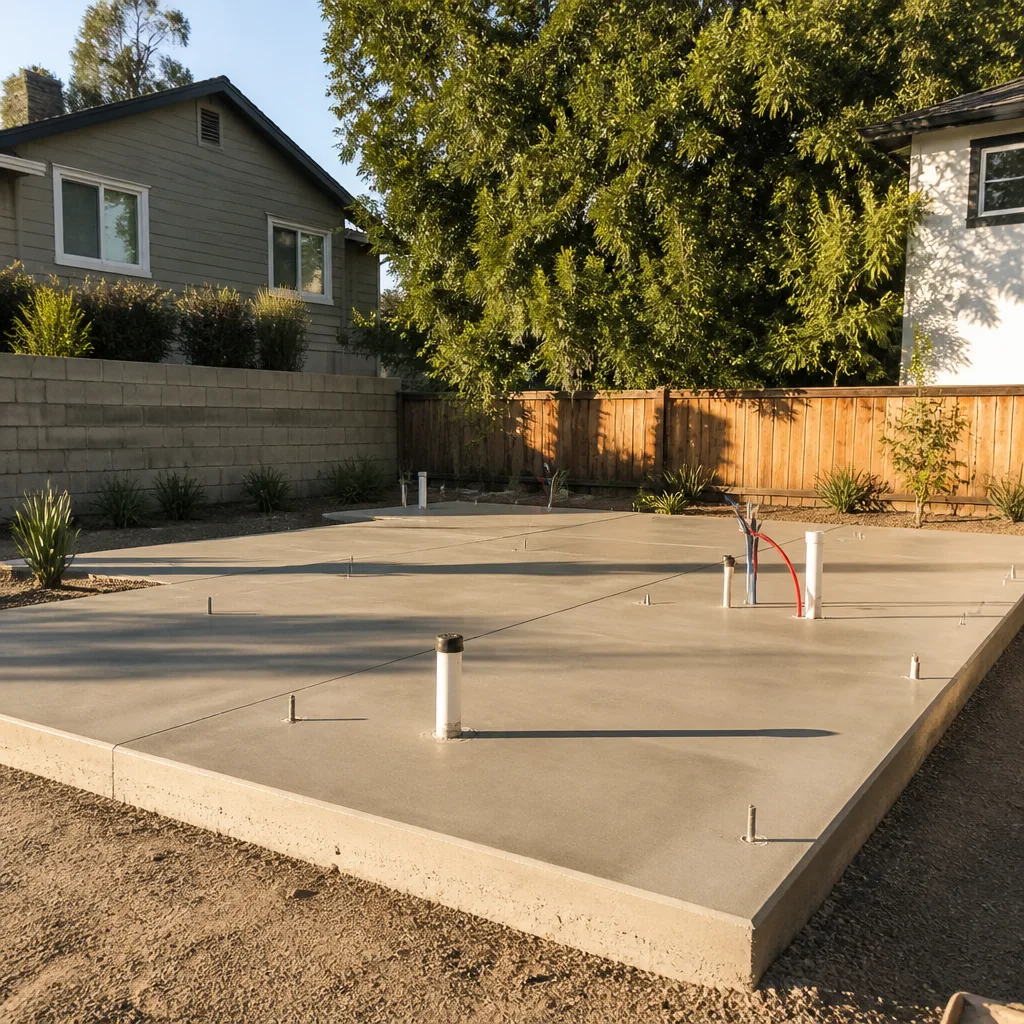
Here’s what site prep and utility work runs for an Abodu in Winchester, itemized so you can see where the money goes:
| Scope of work | Typical installed range |
|---|---|
| Grading, excavation, soil compaction | $4,000 – $9,500 |
| Concrete pier or slab foundation | $6,500 – $15,000 |
| Electrical service trench, conduit, and panel work | $3,500 – $9,000 |
| Water and sewer connections | $3,000 – $8,500 |
| Gas line (if the unit runs gas) | $1,200 – $4,000 |
| Total | $18,000 – $46,000 |
What drives the range: trench length from your panel and sewer main to the pad, whether soil needs import or heavy compaction, and how deep the sewer has to run to hit the correct slope. You get a written, line-item price before any digging begins, and that number doesn’t change unless the scope does. Our work is covered by the 365-Day Done Right Promise, which covers defects in workmanship for one full calendar year from project completion. If something fails, we come back, and the second visit is free.
DIY or Call Us?
There’s a short list of things you can check yourself. Walk the pad after a rain and see which way water runs. Look at your electrical panel and see how many open slots are left. Read the inspection report if you got one. That’s the safe zone.
The trenching, conduit, electrical connections, and gas line are where DIY goes wrong fast. Working in an open trench next to a live gas main or a buried electrical run is dangerous, and a trench that isn’t shored can collapse. A utility connection that fails inspection means redoing the work, and an improperly bonded electrical service is a fire hazard. This is trained-trade work, full stop.
If you’re staring at a failed inspection or a pad that’s holding water, call (844) 761-9367 for a free estimate. We’ll walk the site, read your Abodu plan set, and tell you exactly what’s wrong and what it costs to fix.
FAQs
A properly built foundation and utility rough-in should serve the life of the unit, which for a well-built ADU means several decades. The parts that fail early are the connections and the grading, not the concrete. Grading that directs water toward the pad will cause problems within the first rainy season, and an undersized electrical service can start tripping within months of move-in. Get the grading and the load calculation right the first time and the site work stops being a topic. Call (844) 761-9367 for a free estimate on correcting either.
Often, yes. Grading can be re-sloped without replacing the pad, a sewer stub can sometimes be re-cut and re-bedded, and an electrical service can be upgraded or a sub-panel added without touching the foundation. What can’t be repaired in place is a pad poured at the wrong dimension or a sewer stub that misses the unit’s connection point; those need concrete work. We’ll tell you which side of that line you’re on after we see the site. Call (844) 761-9367 to schedule the walk-through.
Site prep from a clean lot to a finished, inspected pad and utility rough-in usually takes two to four weeks, depending on trench length and inspection scheduling. Rework on an existing pad runs shorter, often three to seven days, since the excavation and some of the conduit are already there. The unit’s arrival date drives everything, so the site work has to finish before the Abodu truck rolls. Call (844) 761-9367 for a timeline on your lot.
We don’t stock Abodu-branded components, because there aren’t any; the utility hardware is standard residential electrical, plumbing, and gas material that meets code. We pull from local trade suppliers in the Winchester area and use listed panels, breakers, conduit, and fittings from recognized manufacturers. The one thing we do source from you is the Abodu plan set, because that’s where the stub coordinates and anchor spacing live. Call (844) 761-9367 for a free estimate and have your plan set ready.
Written by the team at Sutton ADU Builders Winchester, serving Winchester and nearby areas.