Last updated November 18, 2026
ADU Builders Warning Signs Every Homeowner Should Know
A contractor who won’t give you a fixed price before work starts isn’t being modest about costs. They’re reserving the right to charge you more once your backyard is torn up and you’ve lost your leverage. That’s the whole game, and most homeowners don’t recognize it until the invoice arrives. The red flags that cost people six figures in Winchester are rarely hidden. They’re sitting in plain sight on the first phone call. What’s missing is a baseline: most people have never hired an ADU builder, so they don’t know what normal looks like. This guide defines normal, so every warning sign becomes obvious. We’ll cover the estimate, the contract, the crew at your door, the deposit, and the portfolio, in the order you’ll actually encounter them.
Quick Answer
The biggest warning signs from an ADU builder are refusing to give a written fixed price before work begins, quoting without a soil or site assessment, asking for unusually large upfront deposits, and sending crew members whose names and credentials you can’t verify before they arrive. In Winchester, add one more: a builder who doesn’t know Nevada’s owner-occupancy rules for ADUs or the local setback and utility requirements. Legitimate builders put the price in writing, name the people coming to your property, and welcome your questions about permits.
Table of Contents
- What Does a Normal ADU Bid Actually Look Like in Winchester?
- Warning Sign 1: No Fixed Price Before Work Starts
- Warning Sign 2: A Quote With No Soil or Site Assessment
- Warning Sign 3: Vague Contract Language (With Real Examples)
- Warning Sign 4: Crews You Can’t Verify Before They Arrive
- Warning Sign 5: The Deposit and Payment Schedule
- Warning Sign 6: A Portfolio You Can’t Verify
- Winchester-Specific Red Flags Most Homeowners Miss
What Does a Normal ADU Bid Actually Look Like in Winchester?
Before you can spot a bad bid, you need to see a good one. A healthy ADU bid is specific, priced, and structured. In the Winchester market, a detached ADU in the 600 to 900 square foot range commonly runs somewhere in the $180,000 to $320,000 band before site work, and the bid you receive should break that number into real line items: foundation, framing, utilities, finishes, permits, and the site work that gets priced separately. A garage conversion sits well below a detached build because you’re keeping the slab and three walls. A bid that shows one number with no breakdown is not a bid. It’s a placeholder.
A legitimate Winchester bid also reflects the local reality of building here. Lots in older parts of town can have utility easements and aging sewer laterals that affect where a structure can go, and the high-desert climate around Winchester means foundation design has to account for expansive soils in some areas. A builder who’s actually worked Winchester lots will mention soil, slope, and utility routing on the first walkthrough. If they don’t, they either haven’t looked or haven’t built here. Either answer tells you something.
- Line-item pricing: materials, labor, permits, and site work priced separately.
- Site notes: soil, slope, drainage, and utility routing addressed in writing.
- Timeline: a schedule with permits, construction, and inspection milestones.
- Guarantee: a named, written workmanship guarantee, not a verbal nod.
- Named crew: who’s coming, when, and how you’ll verify them at the door.
Compare that against what most homeowners in Winchester actually receive on the first round: a one-page estimate with a range and an asterisk. If you haven’t seen a proper bid yet, the ADU Builders in Winchester page walks through what a full project scope includes so you have something to compare against.
Warning Sign 1: No Fixed Price Before Work Starts
This is the single most reliable predictor of a runaway budget: a builder who won’t commit to a number in writing before the first shovel hits the ground. The excuse is usually that “costs are unpredictable right now” or “we’ll know more once we get into it.” That sounds cautious. It’s actually a reservation of the right to bill you whatever the job turns out to cost, at a point when your backyard is demolished and you have zero negotiating position. Once your lot is torn up, switching builders costs you more than accepting the overrun.
A fixed written price isn’t a guarantee that nothing will ever change. Rock-solid pricing can’t predict a hidden sewer line. What a fixed price does is define the baseline so scope changes are itemized, agreed, and signed before work continues. That’s the difference between a change order you approve and an invoice you didn’t expect. The no-change-order approach is standard practice for reputable ADU builders, and it’s what separates a bid from a guess.
- Ask for the price in writing, itemized, before any contract is signed.
- Ask directly: “Can this number change after work starts, and under what circumstances?”
- Get the answer in the contract, not on the phone. If it’s not in writing, it doesn’t exist.
- Refuse to sign anything that leaves the total open-ended with a “to be determined” line.
Also watch for the softer version of this red flag: a very low number delivered verbally and never put in writing. If the number is good, a builder will happily commit to it on paper. An unwillingness to commit is a pricing question, and the answer is almost always more of your money.
Warning Sign 2: A Quote With No Soil or Site Assessment
A builder who quotes your ADU from a photo of your lot or a phone call hasn’t priced your ADU. They’ve priced an average ADU that doesn’t exist. This is a red flag specific to ADUs in a way it isn’t for a kitchen remodel, because an ADU is a standalone structure with its own foundation, its own utility connections, and its own drainage. Every one of those depends on what’s under and around your lot. Expansive soils in the high-desert around Winchester can change foundation design and cost. Slope affects grading and access. A buried septic line or an old tree root system can move where the structure can legally sit.
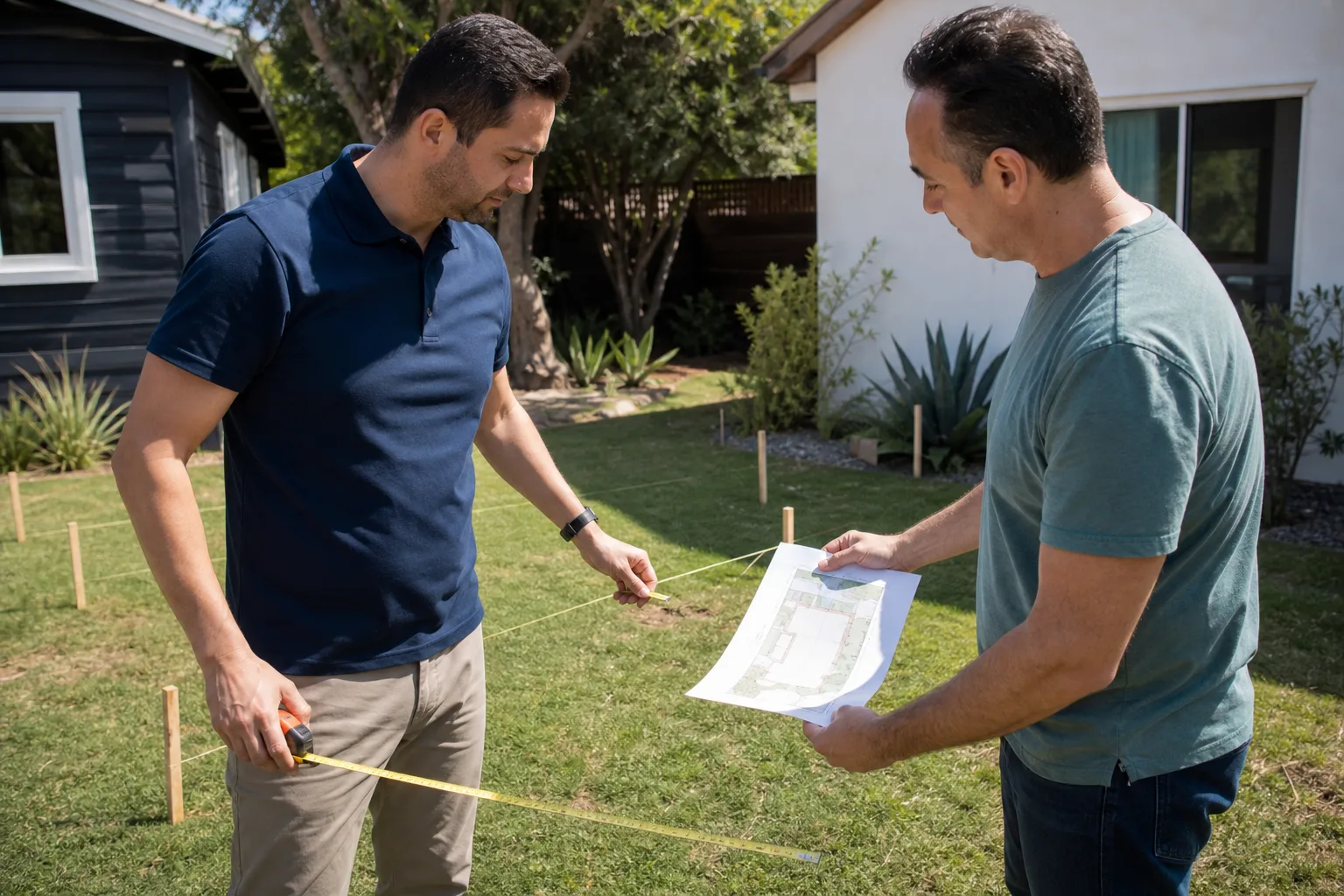
A legitimate builder walks your lot, checks setbacks against your plat, looks at existing utility routing, and asks about soil conditions or orders a report. When you ask “why is the number what it is,” a real builder can point to the foundation and site work and explain it. A high-pressure sales call with a same-day quote and no site visit is pricing you blind.
What a site assessment should cover
- Setbacks (the required gap between your new structure and the property line) checked against your specific lot.
- Utility routing: water, sewer, gas, and electrical entry points.
- Drainage and grading, so the ADU doesn’t send water toward your main house.
- Soil conditions and whether a geotechnical report is needed for the foundation.
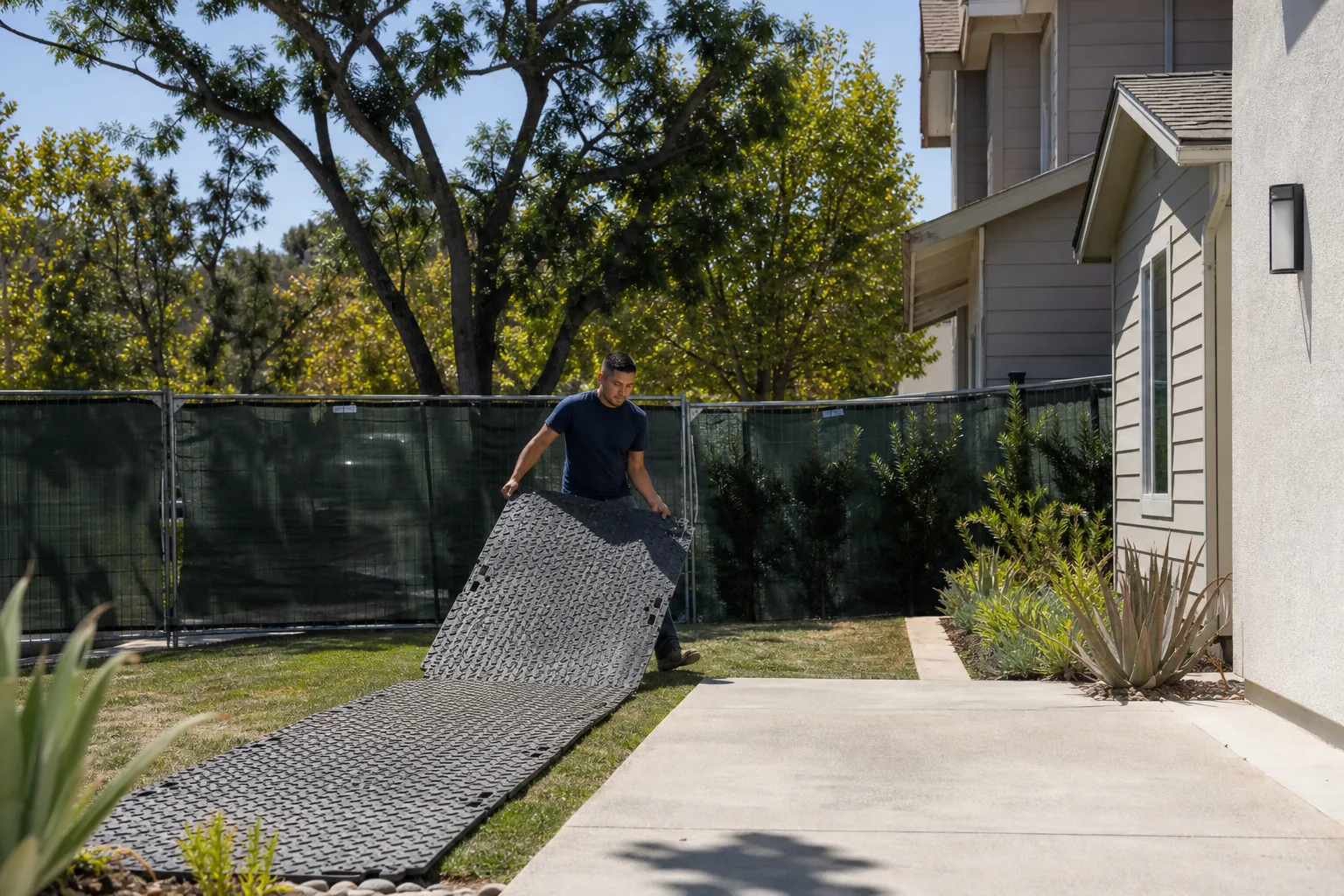
- Access, so heavy equipment can reach the site without tearing up your driveway or a neighbor’s yard.
If you’re converting a garage rather than building new, the assessment question changes but doesn’t disappear: has anyone checked whether the existing slab and framing can carry the conversion loads? A garage conversion is cheaper because you’re keeping the structure, not because it needs less engineering. If a contractor quotes a conversion without walking the garage, that’s the same red flag in smaller clothing.
Warning Sign 3: Vague Contract Language (With Real Examples)
Contract language is where vague bids hide. Most homeowners never read the contract closely enough to notice, so let’s go word for word. A legitimate ADU contract names the price, the scope, the payment schedule, the timeline, the warranty, and the permit responsibility. Vague language does none of those things. Here’s what the difference actually looks like on the page.
A vague contract says: “Allowance for finishes as mutually agreed.” That means the finish allowance is a placeholder, and anything above the allowance becomes a change order billed to you. A legitimate one says: “Finish allowance: $18,000 for flooring, fixtures, and paint. Line-item costs above allowance approved in writing before purchase.”
A vague contract says: “Permits to be pulled as needed, cost passed through to homeowner.” That’s technically true, but it hides whether the permit work is included in the price or extra. A legitimate one says: “Permit fees included in the fixed price above; builder responsible for submittal, correction notices, and inspection scheduling.”
Here’s a short list of phrases to treat as billboards advertising an open-ended invoice:
- “To be determined” next to a major line item, with no dollar amount and no date.
- “Builder not responsible for…” followed by anything that isn’t a genuine homeowner responsibility, like site access.
- “Homeowner to ensure…” where the homeowner isn’t qualified or equipped to do the thing.
- “Standard materials” with no list of what “standard” means.
- “Weather permitting” as the only timeline language, which is effectively no timeline.
The remedy is simple. Ask the builder to define every vague term in writing before you sign. A real builder will. A builder who won’t is telling you what’s coming.
Warning Sign 4: Crews You Can’t Verify Before They Arrive
Here’s the ADU-specific red flag most guides skip, and it’s the one that combines safety with liability. An ADU build runs months, and crews come and go: framers, plumbers, electricians, insulators, drywallers, concrete, roofers. If the builder can’t tell you who’s showing up on a given day and how you’ll verify them at the door, you’re asked to let strangers onto your property with no way to confirm they’re legitimate. That’s a security problem for anyone home alone, for parents with young children, and for older homeowners who choose a builder specifically because they want to know who’s coming.
It’s also a liability problem. An unlicensed or uninsured subcontractor who’s hurt on your property can turn your homeowner’s insurance into a battleground, or leave you liable for an injury that should have been covered by the contractor. If the builder can’t verify that every person who steps onto your lot is background-checked, identity-verified, and covered under their policy, the liability question lands on your shoulders.
The Threshold Standard, explained
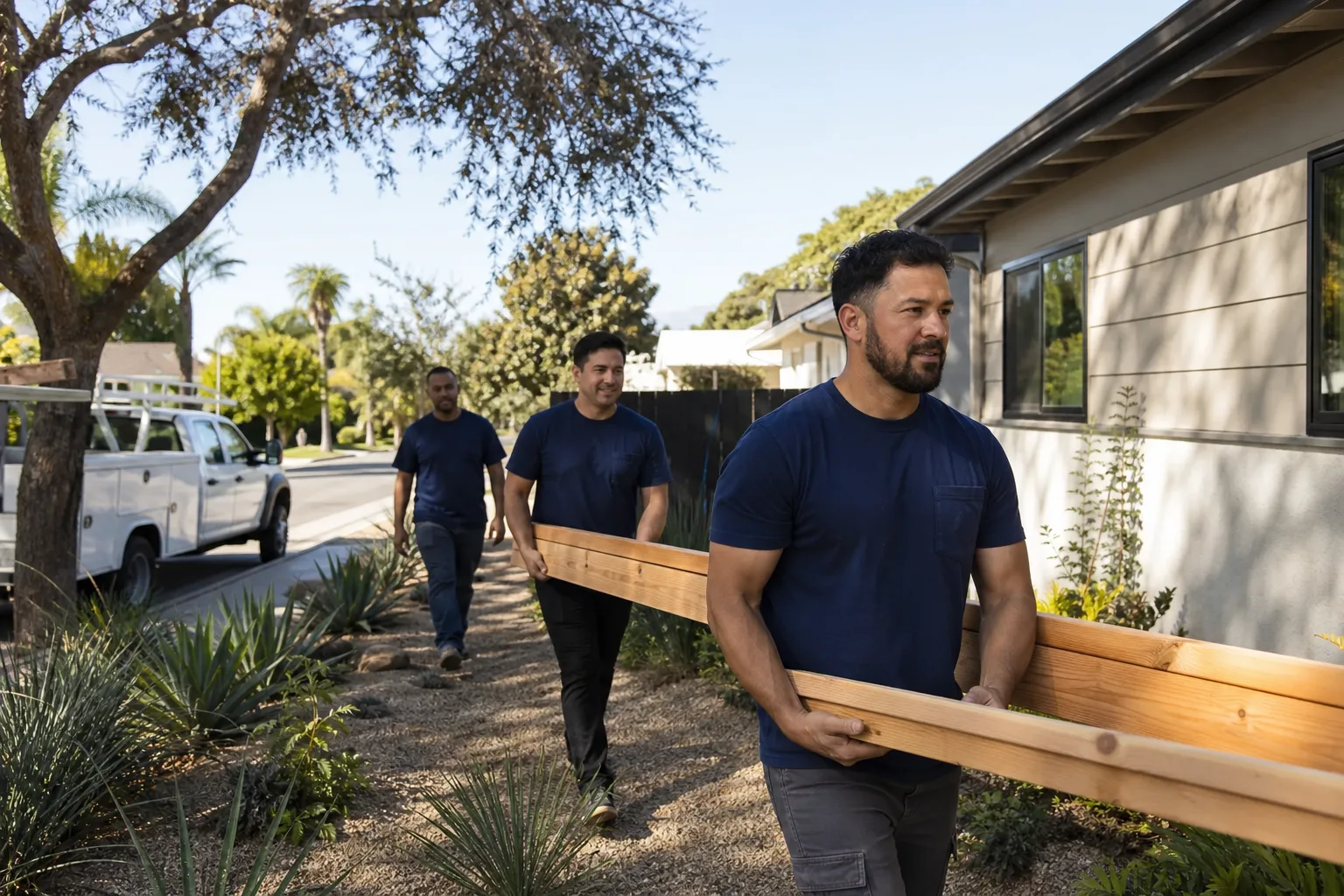
Every technician who arrives on a Sutton ADU Builders project is background-checked and identity-verified. Their name and photo are sent to you before the visit. They show a photo ID badge at the door and arrive in a uniform. That’s what The Threshold Standard means in practice: not a hope that the crew is vetted, but a system that proves it every time. If your builder can’t tell you who’s coming, that’s your answer. Ask for names and photos or ask for the door.
Warning Sign 5: The Deposit and Payment Schedule
The deposit red flag is one homeowners spot too late, because they’ve already committed to a builder and don’t want to start over. Here’s what protects you. A reasonable deposit for a construction project covers design work, permits, and materials needed to start, and is typically a fraction of the total contract, not most of it. What triggers suspicion is a demand for a large upfront payment before any work is done, before permits are pulled, before the plans are even finalized. That sequence should reverse everything you’ve learned about this builder.
The real protection isn’t a percentage on its own. It’s a payment schedule tied to completed milestones, with retention held until inspection and final walkthrough. You pay for framing once framing passes inspection. You hold final payment until the punch list is closed. That structure keeps your money acting as leverage for the whole job, not just for the first month.
- Milestone payments: money is released as stages are completed and inspected, never in a lump sum up front.
- Retention: a portion of the contract is held until final walkthrough and punch-list completion.
- Written schedule: the amounts and trigger conditions are in the contract, not agreed verbally.
- No cash-only demands: a builder who only accepts cash, or refuses a check, is creating a record gap you’ll need later.
- Lien waivers: subcontractors sign lien waivers as they’re paid, so nothing comes back to you as an unpaid bill.
If a builder pressures you to front most of the cost before a single permit is pulled, walk away in the same visit. Anyone who’s genuinely confident about the work will let the money follow the completed stages.
Warning Sign 6: A Portfolio You Can’t Verify
Every ADU builder has photos. The question is whose photos they are. Stock images, other firms’ projects, or one great-looking job photographed from a flattering angle at dusk can all pass as a portfolio. To verify the photos are actually their work, ask three specific questions. Then check the answers.
- Ask for addresses or cross streets of recent projects in the Winchester area. A real builder names projects. A fake one gives generalities.
- Ask whether you can drive by a completed ADU. A builder with nothing to hide will happily tell you a neighborhood to look at.
- Ask for references from homeowners whose ADUs are older than a year. Anyone can be happy on handover day. What matters is whether the work held up and whether the builder came back when something needed attention.
Watch for matches between the builder’s photos and images that show up on review sites or manufacturer pages. If you spot a photo in a builder’s portfolio that also appears on an ADU manufacturer’s marketing site with no credit to the builder, you’re looking at borrowed images. Reputable builders work with product lines like Abodu, Dvele, Mighty Buildings, and Cover and are happy to tell you which product line each project used and why. “We built that one” should be possible to confirm with a phone number and an address.
Winchester-Specific Red Flags Most Homeowners Miss
Some warning signs show up in every market. A few are specific to building an ADU in Winchester and in Nevada, and those are the ones out-of-area builders tend to miss. Start with owner-occupancy rules. Nevada gives homeowners a path to an ADU under conditions that include owner occupancy, meaning the property has to be the owner’s primary residence for the ADU to be permitted as designed. A builder who doesn’t ask you about owner-occupancy, or who waves the question away, doesn’t know the local rules. That’s a permit problem waiting to happen, and a permit problem can stall your build for months.
The second Winchester-specific red flag is climate. We build in a high-desert environment with dry summers, real temperature swings, and occasional hard freeze nights. Foundation design, drainage, and exterior cladding all have to account for that. A builder who offers a standard Southern California ADU package without thinking about the high desert around Winchester is selling you a template, not a build. Look for exterior systems built for this climate, like James Hardie cladding, and ask why the builder chose the materials they did.
Third, ask about local setback and utility requirements for your lot. Winchester lots vary widely, and an ADU that fits one parcel may not fit another. A builder who talks in generalities about “the rules” rather than specific setbacks on your plat is guessing. That guess becomes your problem when the permit office corrects it. If you’re expanding your main house instead, the same lesson applies, and the Home Addition Contractor in Winchester page walks through how local site rules affect additions as well as ADUs.
Common Mistakes to Avoid
- Hiring on the strength of a phone call. A bid delivered entirely over the phone, with no walk of your lot, is a guess dressed as a quote. Insist on a site visit before you consider any number.
- Treating a verbal promise as a guarantee. “We’ll make it right if anything goes wrong” is not a warranty. Get the guarantee in writing, with named terms and a defined coverage period.
- Paying a deposit before permits are pulled. If the money moves before the permit work starts, you’ve funded a project that could still be denied. Let the permit process lead the deposit.
- Not asking who’s coming to the door. Crews rotate, and if you don’t know who’s arriving on Friday morning, you don’t have a verification system. Ask for names and photos in advance.
- Skipping the portfolio follow-up. A call to one homeowner whose ADU is a year old will tell you more than every photo on the builder’s website combined.
- Assuming all builders know Nevada’s owner-occupancy rules. Out-of-area builders often don’t. Ask directly, and watch whether the answer is specific or a dodge.
- Signing a contract with “to be determined” language. That phrase is a permission slip for a larger bill. Every blank gets filled or you don’t sign.
When to Call a Professional
Some warning signs are judgment calls you can weigh on your own. Others should send you straight to another builder. Call someone else, immediately, if a contractor demands a large deposit before permits are pulled, refuses to put a fixed price in writing, quotes without walking your lot, or can’t tell you who’s coming to your property. Those aren’t rough edges. They’re disqualifying. If you’re uncertain about a design you’ve been handed, or about how a proposed ADU fits your Winchester lot, bring in a professional who’ll walk the property and put the numbers on paper. Sutton ADU Builders Winchester offers free estimates in Winchester with a written fixed price before any work begins. Call (844) 761-9367 to schedule yours.
Frequently Asked Questions
Refusing to give a written fixed price before work begins is the biggest red flag. It means the builder is keeping the total open-ended, so the final bill depends on how much they want to charge once your backyard is torn up and switching builders costs more than accepting the overrun. Add these to the list: quoting without a site visit, demanding a large upfront deposit, and being unable to name or verify the crew coming to your property.
Most detached ADUs in the 600 to 900 square foot range in the Winchester market run somewhere in the $180,000 to $320,000 band before site work, and a garage conversion sits lower because you’re keeping the existing slab and walls. Your exact number depends on lot conditions, utility routing, finishes, and whether the foundation needs special design. Call (844) 761-9367 for a free written estimate specific to your lot.
A legitimate ADU contract contains a fixed itemized price, a defined scope, a milestone-based payment schedule, a timeline with permit and inspection milestones, a named written workmanship guarantee, and a clear statement of who pulls permits and how fees are handled. Vague language like “allowance as mutually agreed” or “to be determined” should be filled in before you sign.
Ask the builder for the names and photos of the crew members expected on your property, and ask how each person will be verified at the door. Every technician on a Sutton ADU Builders project is background-checked, identity-verified, and photo-badged, and their name and photo are sent to you before the visit. If your builder can’t tell you who’s coming, that’s your answer.
Yes. Nevada allows ADUs under conditions that include owner occupancy, so your builder should confirm how those rules apply to your specific property before pricing the project. A builder who doesn’t ask about owner-occupancy, or who waves the question away, is signaling they don’t know the local rules, and that can stall your permit later. Ask directly and listen for a specific answer.
A normal deposit covers design work, permits, and materials needed to start, and it’s typically a fraction of the total contract, not most of it. What should protect you is a payment schedule tied to completed milestones, with a portion held as retention until final walkthrough. Demand for a large lump sum before permits are pulled is a warning sign. Call (844) 761-9367 for a free estimate with a written payment schedule.
The Bottom Line
Most bad ADU contracts look fine until they aren’t. The way to avoid one isn’t to become a detective in month three; it’s to know what normal looks like before you sign. A written fixed price, a site visit before any number, a contract with no vague language, a named and verifiable crew, a milestone-based payment schedule, and a portfolio you can confirm with a phone call. Those six things, checked in order, will save you from nearly every builder who’ll fail you later. If a builder bounces off any one of them, you’ve learned something valuable without spending a dollar. Sutton ADU Builders Winchester builds under The Threshold Standard: a written price before work begins, provided crew names and photos before arrival, and a 365-Day Done Right Promise covering workmanship. You can see how that standard runs through every project on the Room Addition Contractor in Winchester page and the Sutton ADU Builders Winchester home page.
If you’re ready to see a real written bid instead of a phone estimate, call (844) 761-9367 for a free estimate. Our technicians have up to 20 years of experience, and the first thing they’ll do is walk your lot before quoting a number.
Written by the team at Sutton ADU Builders Winchester.