Last updated November 18, 2026
ADU Cost Breakdown: The Winchester Homeowner’s Reference for 2026
The $150-per-square-foot figure you’ll find in most ADU articles is the construction cost, and nothing else. It excludes permits, utility connections, design fees, and site prep, which together can add 35 – 60% to that number in Winchester. That gap is why the same “detached one-bedroom ADU” gets quoted at $80,000 on one site and $400,000 on another. Neither number is a lie. Both are incomplete. This reference names every cost category that actually drives Winchester pricing in 2026, gives real dollar ranges for each, and shows you where a written fixed-price contract protects you and where it doesn’t.
Quick Answer
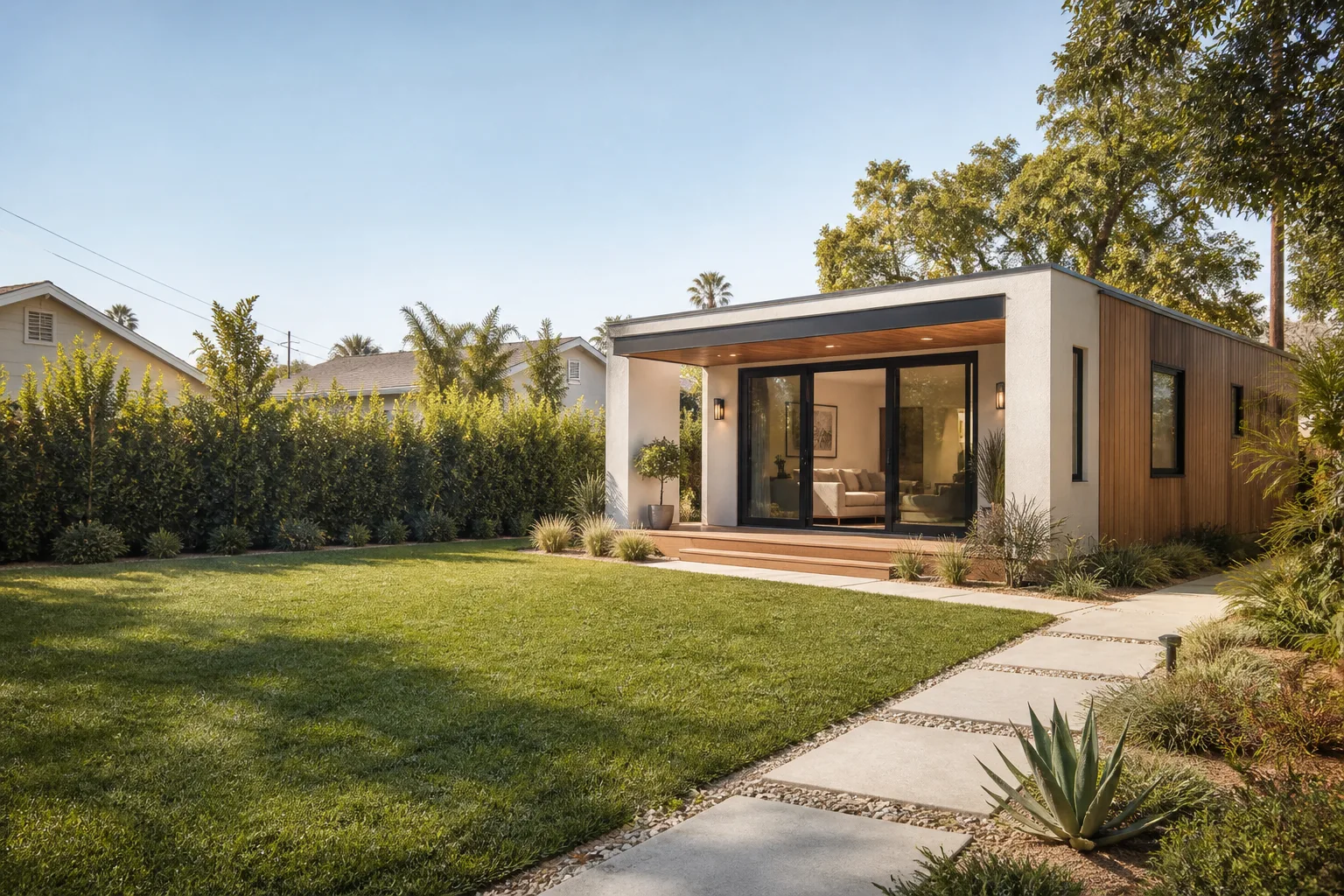
A detached ADU in Winchester typically runs $210,000 – $340,000 all-in for a 600 – 900 sq ft unit, while a garage conversion usually lands between $95,000 – $165,000 and an attached addition sits around $180,000 – $280,000. Those totals include hard construction, design, engineering, permits, utility connections, and an allowance for Winchester’s caliche soil and slope grading. A written fixed-price contract locks the construction scope and price before work starts, but only a clearly worded change-order clause caps what surprises can add later.
Table of Contents
- Hard Construction Costs by ADU Type in Winchester
- The Five Soft Costs Most Estimates Leave Out
- Winchester Site Conditions That Move the Number
- What a Written Fixed-Price Contract Actually Locks In
- Nevada ADU Financing Options in 2026
- The Seven-Step Path From Budget to Built
- Common Mistakes to Avoid
- Frequently Asked Questions
Hard Construction Costs by ADU Type in Winchester
Hard costs are labor and materials: foundation, framing, roof, windows, siding, mechanical, electrical, plumbing, insulation, drywall, finish. It’s the biggest line on the budget and the one every article quotes. Here’s what we see in Winchester in 2026, driven by Clark County labor rates and material pricing for the Las Vegas Valley.
- Detached new build (600 – 900 sq ft): $175 – $260 per sq ft for construction alone. A 750 sq ft unit at $220 per sq ft is roughly $165,000 in hard costs before anything soft.
- Garage conversion (400 – 600 sq ft): $135 – $200 per sq ft. Less framing and foundation work, but you’re adding a kitchenette, a bathroom, insulation, and a separate HVAC zone into space that was never designed for it.
- Attached addition (500 – 800 sq ft): $165 – $240 per sq ft. Sharing a wall cuts exterior envelope cost, but tying new framing into existing structure and matching rooflines adds labor.
Prefab and modular lines change the math. A Boxabl or Cover unit can shorten the on-site build dramatically because the shell arrives finished from a factory, but you’re still paying for foundation, utility trenching, delivery, crane set, and finish connections. In our experience, prefab saves time more reliably than it saves money on small lots. Larger panelized systems from Dvele or Mighty Buildings can pencil out well when you want a specific finish level without the labor volatility of site-built framing. Every lot in Winchester answers that question differently.
One note on finishes: every $10 per sq ft you add in finish upgrades on 750 sq ft is $7,500. The kitchen, the bathroom, and the exterior cladding are where budgets quietly grow.
The Five Soft Costs Most Estimates Leave Out
This is the section that explains the $80,000-versus-$400,000 spread. Soft costs are real, non-negotiable, and almost always quoted separately or omitted entirely from headline numbers. In Winchester, budget these five before you ever talk about countertops.
- Architectural drawings: $4,000 – $12,000 depending on complexity. Simple garage conversions sit at the low end; a custom detached ADU with a pitched roof and covered porch pushes higher.
- Engineering stamps: $1,500 – $4,500. You need structural calcs, and often soils and energy compliance documentation, stamped by a licensed Nevada engineer. Caliche soils make the soils report non-optional.
- Permit fees: $2,500 – $6,500 for a typical Winchester ADU. Clark County and City of Las Vegas fee schedules are based on valuation and square footage, and they vary enough that you should request the fee estimate in writing.
- Utility connection fees: $3,000 – $18,000. This is the wild card. Running a new gas line or upgrading the electrical service from 100A to 200A can add thousands. Water and sewer tap fees depend entirely on where your main sits relative to the new structure.
- Inspection and compliance costs: $800 – $2,500 across the build for third-party inspections, energy compliance verification, and final sign-off documentation.
Add those five to your hard-cost number and you get a real budget. Whether you build a detached ADU or a home addition in Winchester, the soft costs work the same way and deserve the same line on the spreadsheet. Anyone who quotes you $150 per sq ft and stops there has left 35 – 60% of the project off the page.
Winchester Site Conditions That Move the Number
Winchester has site conditions that flat-lot ADU articles don’t account for. Three drivers come up on almost every project we look at here.
Caliche soil remediation
Caliche is a cemented, calcium-carbonate layer in the soil that can be harder than soft rock. It plays havoc with excavation, footings, and trenching. On lots with heavy caliche, we see remediation and special footing costs add $8,000 – $25,000 over a comparable flat-lot build. A soils report tells you early whether you’re in that range, and it’s money well spent because it prevents a mid-project change order.
Utility distance from the main
Every foot you run water, sewer, gas, and electrical from the main to the new structure costs money. A detached ADU 30 feet from the main is one budget; an ADU 100 feet back on a deep lot with a driveway in the way is another. Trenching, conduit, and gas line runs commonly add $6,000 – $15,000 depending on distance and obstacles.
Slope grading
Winchester lots are not uniformly flat. A sloped lot needs grading, retaining walls, or a stepped foundation, and each adds cost. Grading and retaining work can run $5,000 – $20,000. Drainage matters here too: with the valley’s monsoon-season downpours, a graded lot that drains toward your house needs correction before the pour, not after.
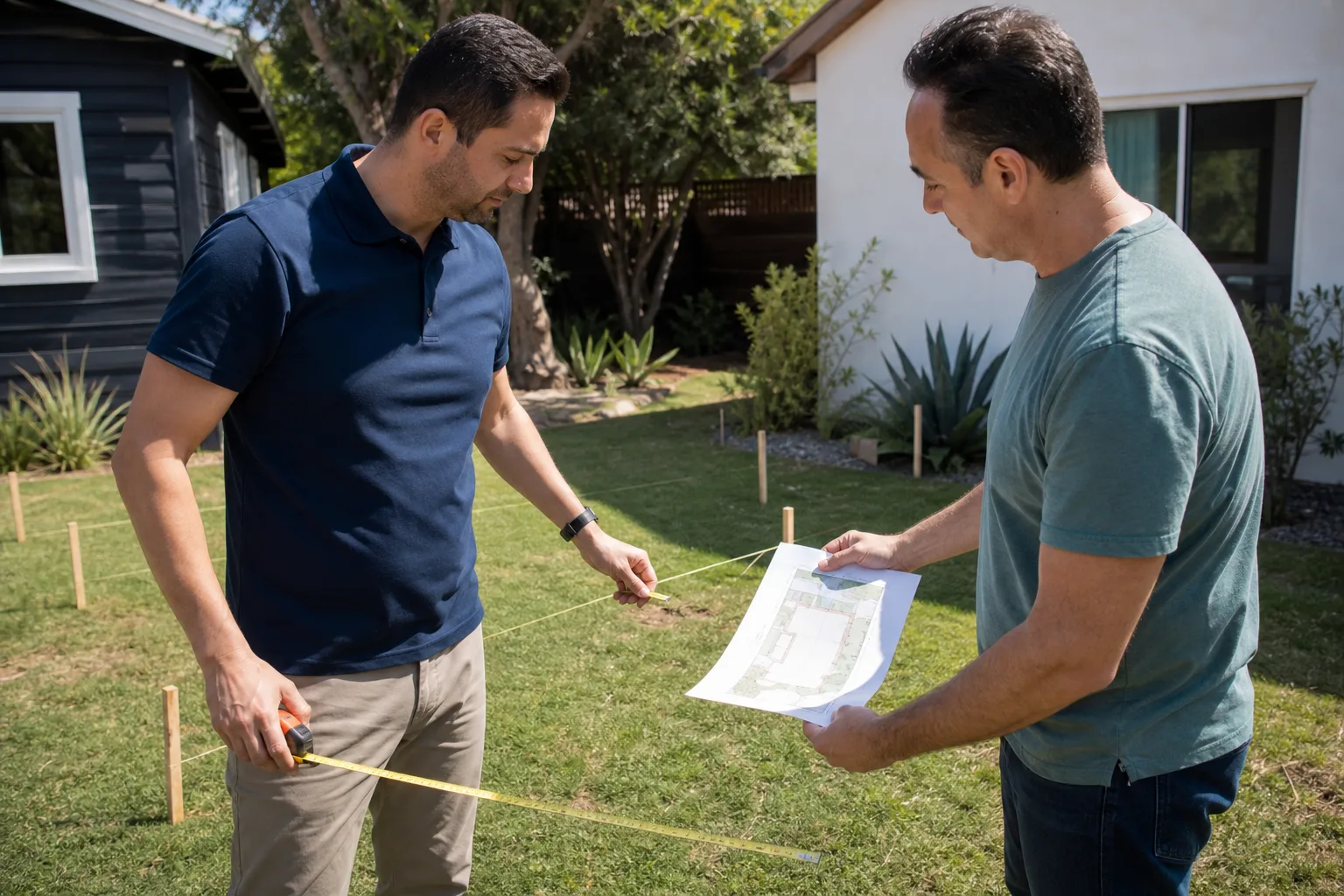
Our technicians have up to 20 years of experience reading a lot before the first shovel goes in, and these three drivers are why a site visit is non-negotiable before you get a real Winchester number. A room addition contractor in Winchester deals with the same drivers on attached work, because the site conditions don’t care what you’re building on top of them.
What a Written Fixed-Price Contract Actually Locks In
A written fixed-price contract is the single most valuable document in your project. It locks the scope, the price, and the schedule for the work described in it. It does not make the project immune to surprises. Understanding the difference protects your budget.
What a written price locks in:
- The construction scope: line items for foundation, framing, roof, mechanical, electrical, plumbing, and finishes.
- The bottom-line price for that scope.
- The payment schedule and the schedule of work.
What a change order can still add:
- Unforeseen site conditions that a soils report or site visit couldn’t predict (buried debris, an undocumented utility line).
- Homeowner-requested upgrades or layout changes made after signature.
- Code corrections triggered by the permitting authority after drawings are reviewed.
You cap your exposure contractually in three ways: require all change orders to be written and signed before the work happens, with a named dollar amount; set a contingency line in the budget (10 – 15% is reasonable) and hold it; and confirm the contract lists what’s excluded so nothing rides in under a vague “allowance.” Ask directly: what’s not in this price? A builder who answers that question clearly is the one to sign with. A vague estimate with no exclusions listed is where surprise invoices come from, and it’s the pattern we built our written-price process to eliminate. If you’re weighing detached ADU versus attached addition versus converted garage, start with the ADU builders in Winchester page for how the decision plays out locally.
Nevada ADU Financing Options in 2026
How you pay for the build matters as much as the price. Nevada owners have three realistic 2026 paths, and each has an honest trade-off.
- ADU-specific loan products: Some lenders underwrite against the projected rental income of the finished unit, which can qualify you for more than a standard renovation loan. Trade-off: underwriting takes longer, documentation is heavier, and rates sit somewhat above a primary mortgage.
- HELOC (home equity line of credit): Flexible, draw as you build, and often the simplest path if you have equity. Trade-off: variable rates mean your payment can move, and a heloc is a second lien.
- Cash-out refinance: Replaces your first mortgage with a larger one and gives you the proceeds to build. Trade-off: you reset your rate on your entire balance and pay closing costs, which only makes sense if current rates work for you and the loan size justifies it.
Compare the total cost of borrowing, not just the headline rate. A HELOC at a slightly higher rate over five years can cost less than a cash-out refinance over thirty. Ask each lender what happens if the build runs long and you need a bridge. Then let the construction decision and the financing decision inform each other instead of choosing one before you know the real build number.
The Seven-Step Path From Budget to Built
- Get a site assessment. Have the lot reviewed for caliche, slope, drainage, and utility distance before any design work. This one step prevents the change orders that blow budgets.
- Request a feasibility and permit review. Confirm setback (the required gap between your new structure and the property line), lot coverage, and height limits for your specific parcel in Winchester.
- Commission drawings and engineering. Get the architectural set and the structural and soils stamps in hand before pricing.
- Obtain a written line-item price that separates hard costs from soft costs and lists exclusions.
- Secure financing against the real number, not a headline per-square-foot guess.
- Sign the fixed-price contract with change-order language you’ve read and a 10 – 15% contingency set aside.
- Build and inspect. Confirm permits are pulled and inspections scheduled, and hold the final payment until sign-off and a walkthrough.
That sequence is the difference between a budget you can trust and one that drifts. Our Sutton ADU Builders Winchester home page covers the consultation step, and this is where we start every homeowner: a written price before any work begins.
Common Mistakes to Avoid
- Budgeting off the $150-per-square-foot headline and stopping there. That number is construction only; the real Winchester all-in figure runs 35 – 60% higher once design, permits, engineering, and utilities are counted.
- Skipping the soils report to save money. On Winchester’s caliche-heavy lots, that $1,500 – $3,000 report routinely prevents an $8,000 – $25,000 change order when excavation hits rock.
- Comparing a vague estimate to a written price as if they were the same thing. One is a number; the other is a contract. Ask every bidder what’s excluded in writing.
- Forgetting to hold 10 – 15% in contingency. Even a well-run project meets an unforeseen utility line or code correction, and a contingency kept aside is what makes those surprises survivable.
- Choosing fixtures before pricing the shell. Finishes carry a per-square-foot cost that applies to every square foot; pick the envelope first.
- Assuming a garage conversion is always the cheap route. It often is, but adding plumbing and a separate HVAC zone to a space that never had them closes the gap fast.
- Not confirming who pulls the permits. A builder who pushes that work to you is often signaling what the rest of the project will feel like.
When to Call a Professional
Call a professional when the lot isn’t flat, when the number you’ve been quoted excludes more than it includes, or when you’re ready to convert a budget spreadsheet into a written price you can sign. Winchester homeowners specifically should call when they’re sitting on a caliche lot, when the proposed ADU sits more than 50 feet from the utility main, or when the project involves structural work where an existing structure meets new construction. Those three conditions are where experience saves money and where a written fixed-price contract is worth more than a dozen vague estimates. At Sutton ADU Builders Winchester, every technician is background-checked, identity-verified, and photo-badged, and their name and photo reach you before arrival. Our technicians have up to 20 years of experience, and estimates are free. Call (844) 761-9367.
Frequently Asked Questions
A detached ADU in Winchester runs $210,000 – $340,000 all-in for 600 – 900 sq ft in 2026, while a garage conversion sits around $95,000 – $165,000 and an attached addition lands near $180,000 – $280,000. Those ranges include design, engineering, permits, utility connections, and site work. Call (844) 761-9367 for an exact quote on your lot; estimates are free.
Not when the contract is written correctly. A fixed-price contract locks the scope and price before work begins, and change orders can only add cost if you sign them in writing first. Ask for all exclusions listed in the contract so nothing slips in through a vague allowance. Call (844) 761-9367 to see a written line-item price for your project.
Yes. Every Sutton ADU Builders Winchester project pulls permits and passes inspections as part of the scope, and the permit fees appear on the written price rather than hidden in a markup. We don’t hand that work to you. Call (844) 761-9367 to talk through the permit timeline for your parcel.
A garage conversion typically takes three to five months including permitting, while a detached ADU runs seven to twelve months from contract to final inspection. Prefab lines like Boxabl or Cover can shorten on-site build time if delivery and crane scheduling cooperate. Call (844) 761-9367 for a realistic schedule tied to your specific design.
Because they’re quoting different things. Some headline numbers cover construction only, while others bundle design, permits, engineering, and utility connections, which is where the 35 – 60% gap comes from. Our answer is a written line-item price that separates hard costs from soft costs and lists exclusions. Call (844) 761-9367 for a free estimate framed that way.
Our 365-Day Done Right Promise covers defects in workmanship for one full calendar year from project completion; if it isn’t right, we make it right. If any element of the build fails, the second visit is free, no haggling. Call (844) 761-9367 to ask what the written guarantee covers on your scope.
The Bottom Line
The spread between ADU quotes isn’t dishonesty, it’s the variables. In Winchester, real 2026 numbers run about $210,000 – $340,000 for a detached ADU, $95,000 – $165,000 for a garage conversion, and $180,000 – $280,000 for an attached addition, with soft costs adding 35 – 60% that headline per-square-foot figures ignore. Caliche, utility distance, and slope are the three site drivers that decide whether you land low or high in those ranges. A written price and a clear change-order clause cap your exposure; a soils report and a contingency protect the rest. That’s the whole budget in one paragraph, and it’s the difference between a project that finishes on budget and one that drifts.
Ready to see a real number for your lot? Call Sutton ADU Builders Winchester at (844) 761-9367 for a free estimate, and a live person will answer whenever you call.
Written by the team at Sutton ADU Builders Winchester.